
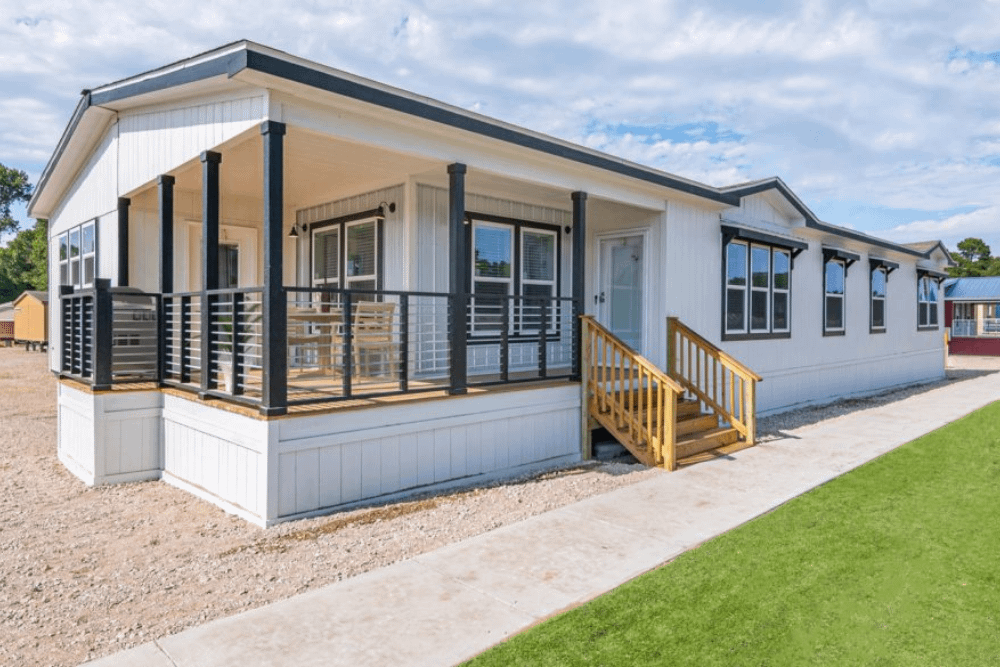

Financing Options for Manufactured Housing
Getting Started
Most people who buy through Braustin don’t pay cash. They finance — and we help them figure out which path makes the most sense for their situation, their land, and their budget.
Manufactured home financing works similarly to buying a traditional house or a car: you take out a loan, make regular payments over a set term (typically 15 to 30 years), and build equity along the way. The difference is that there are several distinct loan types — and the right one depends on factors like whether you own land, your credit profile, and whether you’re a veteran.
Whether you’re placing a home on a leased lot, buying land and a home together, or sitting on acreage you already own free and clear — there’s likely a loan product designed for your situation. The sections below break each option down plainly, so you can walk into any lender conversation with confidence.
Let’s figure out your best path together.
Financing questions are our team’s specialty.
Whether you’re trying to understand your options, figure out if your land can work as a down payment, or just want someone to run the numbers with you — reach out and we’ll get back to you quickly.
- Available in English and Spanish
- Serving TX, OK, NM, LA, and AR
- We work with multiple lenders to find your fit
Have a financing question?
🛈 By contacting us you agree to our Terms of Use, Privacy Policy and to receive important notices and other communications electronically.
Loan Options for Manufactured Homes
Here are the loan types available to manufactured home buyers — and who each one is best suited for.
Chattel Loan
The most common manufactured home loan. The home is the collateral — no land ownership required. It works like a car loan applied to your house, and it’s the go-to option if you’re placing your home in a community, on a leased lot, or on a family member’s property.
Leased land, community lots
Typically 5–20%
15–25 years
21st Mortgage, Triad, Cascade
Land & Home Loan
If you’re buying both the home and the land at the same time, you may qualify for a conventional mortgage — similar to loans for site-built homes. These come with lower interest rates and longer terms than chattel loans, and they build equity in both assets.
Buyers purchasing land + home
5–20%
20–30 years
Permanent foundation
Note: This is different from using land you already own as a down payment. If you own land and want to use it in lieu of cash, see the option above.
Land as a Down Payment
If you own land — even if it was a gift, an inheritance, or something you purchased years ago — that equity can often substitute for a traditional cash down payment. In some cases, it can cover the entire requirement.
Landowners with equity or clear title
Often $0 at closing
Appraisal; minimal existing liens
Mention your land early in the sales process — it changes the math
Not every lender offers this, but our partners at 21st Mortgage and Cascade Financial do. Tell us you own land from the very first conversation and we’ll make sure it’s put to work for you.
Personal Loans & Alternative Financing
Occasionally used for smaller purchases or unique situations where conventional financing isn’t available. Because these are unsecured loans, they carry higher interest rates and shorter repayment windows. Worth knowing about, but rarely the right fit for a full home purchase.
Very specific situations
Higher than home loans
Usually 2–7 years
Not typical for full home purchases
FHA Loan
Government-backed loans insured by the Federal Housing Administration. Designed for buyers with lower credit scores or limited down payment savings. FHA loans for manufactured homes require a permanent foundation and compliance with HUD standards.
Lower credit / limited savings
As low as 3.5%
Up to 30 years
HUD-compliant, permanent foundation
VA Loan
For veterans, active-duty service members, and eligible surviving spouses — the VA loan is one of the best benefits available. No down payment in most cases, no private mortgage insurance, and competitive interest rates. The home must meet VA and HUD requirements and be on a permanent foundation.
Veterans & active military
$0 in most cases
Up to 30 years
VA eligibility + permanent foundation
Understanding Loan Approval: What Lenders Look For
Every lender is different, but these four factors show up in every application. Understanding them puts you in a stronger position before you ever walk into a conversation.
Â
01
Credit Score
Your credit score is a snapshot of your financial reliability — it factors in payment history, credit utilization, and account age. Higher scores mean more options and better rates. There are three main credit bureaus (Equifax, Experian, TransUnion), and lenders may use one or all three. Knowing your score before you apply helps you set realistic expectations — and gives you time to address anything dragging it down.
02
Debt-to-Income Ratio (DTI)
Your DTI is the ratio of your monthly debt payments to your gross monthly income. Lenders are legally required to verify you can afford a new payment on top of what you already owe. Things that count toward your DTI include car loans, student loans, credit cards, child support, and any loans you’ve co-signed. If a family member is gifting you land use at no cost, say so upfront — it helps.
03
Employment & Income History
Most lenders want to see at least two years of consistent income — though that doesn’t mean you need to have worked the same job the whole time. You’ll need to provide W-2s and pay stubs, so income that isn’t on paper generally won’t count. Self-employed buyers may face additional documentation requirements depending on the lender and loan type.
04
Down Payment
The more you put down, the easier it is to qualify — and the better your loan terms will be. Most lenders require a minimum of 5%, though that can go as high as 40% depending on your credit and DTI. Remember: if you own land, the appraised value of that land may count as all or part of your down payment.
Six steps from "thinking about it" to moving in.
Check Your Credit
Pull a copy of your credit report before you start shopping. You’re entitled to one free report per year from each of the three bureaus at annualcreditreport.com. This tells you what lenders will see — and gives you a chance to dispute any errors before they slow you down.
Step 2
Know What You Can Comfortably Afford
Work out a realistic monthly payment budget before you fall in love with a home. Factor in the mortgage payment, lot rent (if you don’t own land), utilities, insurance, and property taxes. Being honest with yourself here saves a lot of heartache later.
Step 3
Inventory Your Assets — Including Land
Do you own land? Is it paid off, or does it have equity? Land you already own can potentially serve as your down payment, which changes what you need to bring to the table. Gather your land documentation — deed, any existing notes — and bring it into the conversation early.
Step 4
Get Pre-Approved
A pre-approval tells you — and sellers — how much you can borrow. It’s a fast, meaningful step that makes everything after it easier. Our team works directly with our lender partners and can help you get there without running in circles.
Step 5
Find Your Home at Braustin
Now the fun part. With your budget and pre-approval in hand, you know exactly what you’re working with. Browse our homes and your consultant will help you match the right floor plan, features, and price point to your situation.
Step 6
Apply, Close, and Move In
Your housing consultant guides you through the full loan application, helps gather the documents your lender needs, and stays with you all the way to closing. When all the paperwork is signed and the loan is finalized, you’re a homeowner.
Lenders who specialize in manufactured homes.
We work with trusted lenders who understand the nuances of manufactured home financing — not lenders who treat it as an afterthought.
Frequently Asked Questions about Financing a Mobile Home
Land in Lieu Down Payments
Do you have a piece of land you own outright? Good news! You can use the value of the land toward your down payment. Your land will need to appraise high enough to meet the down payment threshold the bank wants, but you may not need to come up with additional cash for your down payment.
Choose Your Own Lender

You can utilize your own bank or private lender. Our goal is to make your home buying experience as easy as possible, so we'd love to help you find the mobile home of your dreams, whether you use our lenders or your own. Generally, your own lender will be your favorite bank or a friend or family member who would like to personally loan you money. The advantage of using your own bank is convenience and that you already have a built-up relationship. The only disadvantage is if your bank does not typically handle loans for mobile homes, you may find getting approved for the loan harder than with our lenders, higher deposits may be required, and possibly even a higher interest rate may be assigned to your loan. Just watch the details when you go through the borrowing process. Borrowing from a friend or family member is often offered at lower interest rates or smaller down payments. When borrowing person-to-person, we recommend hiring your own attorney to review the documents to ensure the loan arrangement is fair, no matter how much you trust the loan. This can help when the unexpected comes up; for example, what happens if the lender passes away? You should also know that loans between friends and family members can change the relationship, so be sure to talk through things like what happens if you lose your job, if there is a late payment, etc. Saving a few dollars is not worth driving a wedge between you and someone you care about. Through communication plus clear understanding of the loan arrangement can go a long way to preserving a healthy relationship.
Cash Deals

When someone is paying for a home and installation with money they already have "in the bank," we call it a "cash deal" (but please, don't bring actual cash to the dealership!). We've closed on many mobile homes where people just bring us a check to pay for everything.
Poor Credit Options

Yes, we help a lot of families with poor credit. Anyone with any credit score can get financing, BUT it doesn't always make sense to do so because the interest rate and required down payment may be too high. If you have a credit score over 500 and a decent down payment, usually we can find you acceptable financing, but the only way to know for sure is to apply for a loan. We talk about mobile home financing with poor credit in a blog post that goes into your options in finer detail. We usually suggest that if your credit score is super low and you have no down payment, you talk to the friendly team at Next Step who helps people take the proper steps to be ready to buy a home. Next Step is an independent nonprofit whose sole purpose is helping people get their finances in order so they can buy a home. If you are not sure whether or not you should try for a loan, feel free to give us a call and talk to one of our Housing Consultants about your specific situation.
What do banks look for?

There are several things the banks will look for when determining if they will offer your financing for your new manufactured home in Texas. Each bank has its own unique set of criteria for determining this; however, these are some factors that all banks consider.
Credit Score: Your credit score is a number that gives the banks a snapshot of your financial past. This number factors in payment history, credit utilization, and length of your credit history. The higher the number, the better your credit. There are three credit bureaus that each produce a separate credit score for you. Some banks may only look at one, whereas others will look at the sum of all three. As a new homebuyer, you must know where you stand concerning your credit score so that you are aware of the financing options available to you.

Current Debts vs. Current Income: The banks also look at the ratio between your existing debts and current income. This is commonly referred to as your DTI. Your credit score is essential; however, a low credit score can be offset with a higher down payment. Banks are legally not allowed to lend you money if they determine you do not make enough money to cover your current debts and add a new mortgage payment. Items that show on your credit reports as monthly obligations will factor into your DTI. So will things like child support and loans you co-signed for. When figuring out your debt-to-income ratio, the bank looks at all the expenses associated with your home purchase. This includes lot rent, land costs, taxes, and homeowner's insurance. If a family member allows you to place your home on their property at no cost, make sure you disclose that to the banks.
When figuring your debt to income ratio, the bank looks at all the expenses associated with your home purchase. This includes items like lot rent, land costs, taxes and homeowner's insurance. If a family member is allowing you to place your home on their property at no costs, make sure you disclose that to the banks up front.

Job History: At a minimum, the banks will need to see your two-year work history. This does not mean it must be at the same job. You will need to show W-2s and pay stubs to document your job history, so do not count under the table jobs that cannot be proved with a paper trail. Some banks require you to detail a more extended job history.
Down Payment Percentage: The amount you're willing to put down as the initial investment for your new manufactured home plays a critical role in your bank application. Even the most challenged credit can get approved for a loan with a large enough down payment. In most cases, the minimum allowed by a bank will be 5% and can go as high as 40%, depending on the factors above.
Do you need help with financing?
Can I purchase a home without a down payment?
Visit our showrooms
Working Hours
Mon – Fri: 9am – 6pm
Sat – Sun: 9am – 5pm
3079 W Hwy 80 E
Working Hours
Mon – Fri: 9am – 6pm
Sat – Sun: 9am – 5pm


