


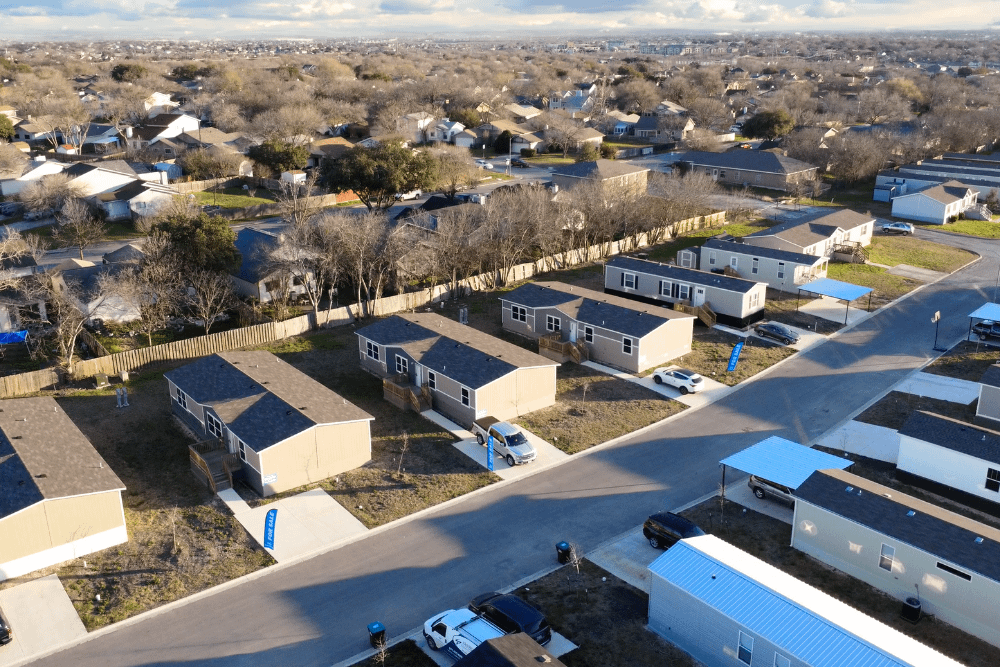
Lot rent is the monthly fee a manufactured home owner pays to lease the piece of land their home sits on in a manufactured home community. Nationally, lot rent typically runs about $400 to $1,000 per month, with the U.S. average around $780/month in 2025. High-demand markets—particularly California metros—routinely exceed $1,500. What’s included—utilities, amenities, common-area upkeep—varies by community.
When comparing a manufactured home to renting an apartment or buying a site-built home, lot rent is the piece buyers most often miss. Understanding it up front is how you calculate the true cost of ownership and make an honest financial decision. At Braustin Homes, our “always upfront” approach is built around giving you those exact numbers before you make a move.
In this guide, we’ll break down what lot rent is, what it typically costs, what it covers, what drives prices up or down, how leasing a lot compares to owning land, and what specific questions to ask a community before signing a lease.
When you’re ready to price out the full picture for your family, feel free to browse our available homes catalog or explore our Texas mobile home cost guide.
What Is Lot Rent? The Short Definition
Lot rent (also called site rent, land rent, pad rent, or space rent) is the recurring monthly fee paid to lease the land underneath a manufactured home.
The key distinction to understand is the ownership split:
- You own the home (the physical structure, for which you may pay a mortgage).
- You lease the land (the plot where the home rests, for which you pay lot rent).
This setup is completely different from renting an apartment—where a landlord owns both the building and the land—and different from traditional land ownership, where you own both the structure and the property underneath. Lot rent applies in manufactured home communities (often referred to as mobile home parks), 55+ active adult communities, and land-lease subdivisions. It does not apply if you place your home on land you own.
How Much Is Lot Rent? Typical Ranges Across the U.S.
Because lot rent is tied to local real estate values, rates vary significantly depending on where you live.
- National Range: Across the country, lot rent ranges from $400 to $1,000 per month, with the national average landing around $780/month in 2025 (based on data from industry research surveys by MHInsider and Datacomp/JLT). High-cost coastal markets run much higher.
- Regional Trends: The Northeast and West Coast trend significantly higher due to strict zoning and high land values. The South, Midwest, and rural markets stay substantially lower.
- Texas Typical Range: In most Texas markets, lot rent typically runs $300 to $700 per month. Rates in major metro suburbs like Austin, Dallas, or Houston run toward the higher end of that range, while secondary markets and rural communities remain closer to the bottom.
Rather than looking at single “average” numbers, focus on monthly ranges in your target area. A community’s lot rent reflects its location and amenities far more than the size or age of your home.
What Does Lot Rent Include? (And What It Doesn’t)
The services covered by lot rent vary meaningfully from one community to another. Knowing what is included in your base rate is critical to accurately budgeting your monthly expenses.
What Lot Rent Typically Includes
- Use of the land: The plot your home sits on, often including a small private yard area.
- Trash and recycling pickup: Standard weekly waste collection service.
- Water and sewer: Included in many communities, though some bill these based on sub-meters.
- Common-area maintenance: Upkeep of internal community roads, street lighting, sidewalk repairs, and shared landscaping.
- Community amenities: Access to on-site features like swimming pools, clubhouses, playgrounds, dog parks, or gated entries where available.
- Property management: An on-site or regional point of contact for property maintenance issues.
What Lot Rent Usually Doesn’t Include
- Electricity and natural gas: Almost always billed separately to the homeowner by local utility providers.
- Internet and cable TV: Sourced and paid for directly by the resident.
- Homeowner’s insurance: Coverage for the home structure and personal belongings is your responsibility.
- Property taxes on the home: Because your home is titled separately from the land, property taxes on the structure are billed directly to you.
- Interior and home maintenance: Repairs to your roof, HVAC, or plumbing inside the home.
- Specialty add-on fees: Some communities charge separate monthly fees for pet ownership, extra parking spaces, storage sheds, or premium lot locations (like waterfront or corner lots).
A quick practical tip: Always ask a community manager for a written breakdown of included services versus separate charges before signing a lease agreement.
What Drives Lot Rent Up or Down
Understanding what drives lot rent costs helps you decide whether a specific community offers good value for your money.
- Location: Proximity to major metro areas, job centers, and high-performing school districts pushes land values—and lot rent—up. Rural parks stay far lower.
- On-Site Amenities: Features like swimming pools, fitness centers, gated entries, and organized 55+ social calendars cost money to maintain, which is reflected in the lot fee.
- Lot Placement: Corner lots, waterfront sites, or larger parcels carrying extra square footage usually demand premium pricing.
- Utilities Included: A lot fee that covers water, sewer, and trash may look higher on paper than a “bare lot” lease, but your total out-of-pocket costs could actually be lower.
- Market Demand: When local apartment rents and traditional home prices climb, land-lease communities tend to see increased demand, pushing rates upward.
- Annual Rent Increases: Historically, lot rent increases averaged 3% to 5% per year, though national averages hit 5% to 7% in recent years. In Texas, rent increases are governed by state law under Texas Property Code Chapter 94, which requires written notice before any lot fee adjustment takes effect. Read our breakdown on mobile home rent increases in Texas for details on notice periods and tenant rights.
Lot Rent vs. Owning Your Land — The Two Paths
When buying a manufactured home, deciding whether to lease a lot or buy private land is one of your biggest strategic decisions.
| Decision Factor | Leasing a Lot (Community) | Owning Your Land (Private Parcel) |
| Upfront Land Cost | Low: No land purchase required | Higher: Must purchase land & run utilities |
| Monthly Land Cost | Ongoing: Monthly lot rent for life | Zero: No lot rent once land is paid |
| Maintenance | Shared: Community handles common roads/amenities | 100% Owner: You maintain roads, septic, & grounds |
| Equity Growth | None: Lot rent creates no land equity | High: Land appreciates over time |
| Control & Rules | Subject to community rules & restrictions | Full site control (subject to local zoning) |
The Math Illustrated
If you pay $500/month in lot rent, over 10 years you will spend $60,000 in land lease payments that build no personal equity. Purchasing a land parcel outright requires a higher initial investment for land prep and utility connections, but eliminates monthly rent permanently and creates a real estate asset that can appreciate over time.
However, leasing a lot remains a popular option for first-time buyers, seniors, or those who prefer lower upfront setup costs and community-maintained amenities.
If you already own land in Texas: Braustin offers land-in-lieu financing, which lets you use your land equity as your down payment instead of cash upfront. You can also read our guide on purchasing land for a manufactured home to compare options.
What to Ask a Community Before You Sign
Before signing a community lease, use this checklist to avoid unexpected costs or rule surprises:
- What is the current base lot rent, and what is the total recurring monthly fee? (Ask if there are mandatory administrative or trash fees on top of base rent.)
- Can I get an official list of included utilities in writing?
- What has the historical rent increase percentage been over the past 3 to 5 years?
- How much advance written notice is provided before a rent change? (In Texas, Chapter 94 outlines rules for written notice.)
- Who owns and manages the community? (Locally owned properties often operate differently than corporate REIT-managed parks.)
- Are there restrictions on home age, exterior modifications, landscaping, or pets?
- May I review a full copy of the community lease and rules before placing a deposit?
- What is the procedure if I sell my home in the future? (Can the buyer inherit your lot lease, or must they re-apply?)
Common Questions About Lot Rent
Q. Do you pay lot rent if you own your mobile home?
A. Yes. Even if you own your manufactured home free and clear (with no home mortgage), you must still pay monthly lot rent if the home sits on leased land in a community. The only way to eliminate lot rent completely is to own the land beneath your home.
Q. Can lot rent go up every year?
A. Yes. Most communities review and adjust lot rates annually, with typical increases falling between 3% and 7% depending on local market pressures.
Q. Is lot rent tax deductible?
A. Generally, no. For personal residences, lot rent is considered a personal rental expense rather than deductible mortgage interest or property tax. Consult a tax professional regarding your specific situation.
Q. What is the average lot rent in Texas?
A. In Texas, lot rent generally averages between $300 and $700 per month in most markets, with premium metro communities running higher. Texas sits below the national average (around $780/month in 2025), making it a relatively affordable state for manufactured housing community living.
Q. Is it better to rent a lot or buy land?
A. Neither option is universally “better”—it depends on your budget, timeline, and goals. Renting a lot requires significantly lower upfront cash, while buying land costs more initially but builds long-term real estate equity.
Conclusion
Lot rent is the monthly fee to lease land in a manufactured home community—typically running $300–$700 in Texas and $400–$1,000 nationally. What that fee covers varies from park to park, making it essential to evaluate the total monthly expense rather than looking at home prices alone.
Navigating home choices, financing, and site options doesn’t have to be confusing. Whether you plan to place a home in a community or put it on private land, our team is here to walk you through the numbers with complete transparency.
Ready to price out the full picture? Browse available manufactured homes or talk with a Housing Consultant today for clear, honest guidance on your monthly costs.
About the Author
