


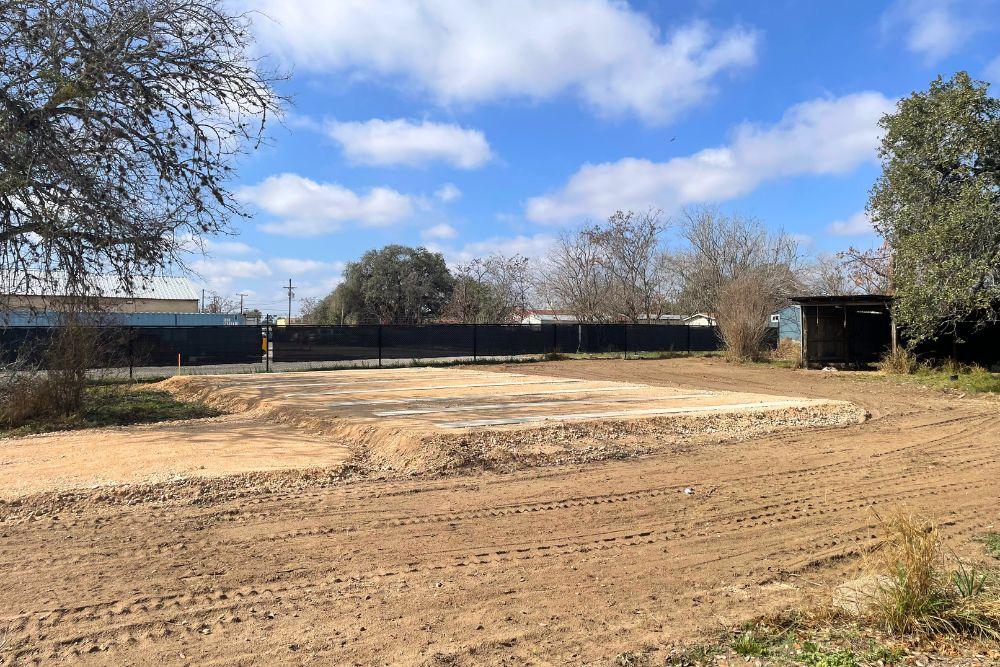
If you own a piece of land and want to purchase a manufactured home but haven’t saved a large cash down payment, land-in-lieu financing may solve both problems at once. This option lets you substitute the equity in your land for the cash a lender would otherwise require — and when the numbers align, qualified buyers can move into a new home with little to nothing out of pocket.
But “little to nothing” is not the same as “without risk.” This guide explains exactly how the process works, what lenders evaluate during underwriting, which documents you’ll need at every stage, and the specific hazards — tax liens, appraisal shortfalls, and combined foreclosure exposure — that every buyer should understand before signing.
What Is Land-in-Lieu Financing?
Land-in-lieu financing is a loan structure in which a borrower pledges owned land as collateral instead of making a traditional cash down payment on a manufactured home. Rather than writing a check at closing, you invest the equity in your property. The lender treats the land’s appraised value as your financial stake in the deal.
This structure is most common through specialty lenders and retailers who focus on manufactured housing. It works differently from conventional mortgage programs because the lender’s lien secures both the real property and the manufactured home together — a combined collateral package that protects the lender’s interest for the life of the loan.
Not every loan program offers land-in-lieu terms. FHA Title II loans, certain conventional loan products through Fannie Mae, and portfolio lenders who specialize in manufactured housing are your most likely options. VA and USDA programs do not typically use a land-in-lieu structure because they already offer zero-down-payment financing for qualified borrowers.
→ Compare manufactured home loan types: FHA, VA, USDA, and conventional options
How the Appraisal Determines Your Down Payment Credit
The single most consequential variable in any land-in-lieu transaction is the appraised value of your land. After you apply, the lender hires a licensed, independent appraiser to assess the fair market value of your property. The equity credit you receive toward your down payment derives entirely from that appraisal — not your county tax-assessed value, not what you paid for the parcel, and not what a neighbor’s land sold for last year.
Most manufactured home lenders credit between 90% and 100% of the appraised land value toward the required down payment. Down payment requirements for manufactured home loans typically range from 5% to 10% of the total purchase price, depending on the lender, loan program, and your credit profile. On a $150,000 home with a 10% requirement, you need $15,000 in land equity to cover the full down payment.
The appraisal shortfall risk: If the appraiser’s opinion of value falls short of the amount required for a full down payment, you must cover the gap with cash. If the lender requires $15,000 in equity and your land appraises at $10,000, you’ll need to bring $5,000 in cash to closing — or find a lender willing to restructure the deal. Appraisal shortfalls are one of the most common reasons land-in-lieu approvals collapse. Buyers frequently overestimate their land value before a professional appraiser weighs in. To set realistic expectations before you apply, request a preliminary value estimate from a local real estate agent or appraiser first.
→ See all your manufactured home down payment options
Who Qualifies for Land-in-Lieu Financing?
Meeting the land requirements is only part of the equation. Lenders also evaluate your financial profile against standard underwriting criteria.
Credit score: Most manufactured home lenders require a minimum score of 620. FHA guidelines technically allow scores as low as 580, but lender overlays — internal policies more conservative than the program minimum — routinely raise that floor to 640 in practice.
Debt-to-income ratio (DTI): Conventional programs typically cap DTI at 43%. FHA loans may allow ratios up to 50% with compensating factors such as strong cash reserves or a higher credit score.
Land requirements: Your property must satisfy each of the following conditions to qualify:
- You must hold clear, recorded title — the deed must show your name as owner
- The parcel must be accessible from a publicly maintained road, or at minimum border one (even if only a portion of a larger acreage tract qualifies)
- The land must carry no outstanding tax liens at closing, or you must pay those liens off with closing funds
- The property cannot currently serve as collateral on a separate, active loan
One important but often overlooked detail: your land must be contiguous to or the same parcel as the home site. Lenders won’t accept land located several miles from the home placement.
→ What to look for when buying land for a manufactured home
The Step-by-Step Land-in-Lieu Process
Understanding the sequence of events keeps the transaction moving and helps you anticipate delays. Here is a realistic timeline.
Weeks 1–2: Application and document collection
Submit a loan application and declare your intent to use land in lieu of a cash down payment from the start. Your lender will pull your credit, verify income, and request the core land documents listed in the checklist below. Disclosing the land-in-lieu intent early prevents the lender from structuring the deal as a standard purchase only to restart underwriting later.
Weeks 2–4: Appraisal and title search
The lender orders a licensed appraisal of your land and simultaneously initiates a title search through a title company. The title company examines public records to confirm your ownership and identify any outstanding liens, judgments, tax claims, or easement conflicts. These two steps run concurrently to save time and typically take one to two weeks each.
One underwriting wrinkle to know: If the title search returns a prior owner or lien holder whose name closely resembles yours, the lender will request a “not the same person” affidavit — a signed and notarized statement clarifying that the matching name in the records belongs to a different individual. This is routine, not alarming, but it is time-sensitive. Expect a two-to-five-business-day turnaround to notarize and submit the document. Delays here can push the full closing timeline by a week or more.
Weeks 4–7: Underwriting
Once the appraisal and title search return acceptable results, the file enters underwriting. The lender verifies that your land equity meets the required down payment threshold and that your full borrower profile clears program guidelines. Underwriting for mortgage-style manufactured home loans typically runs two to four weeks.
Closing day
The land and home transaction close simultaneously. After closing, the lender’s lien attaches to both assets. The full timeline from application to closing for a mortgage-style land-in-lieu loan runs approximately 45 to 60 days — roughly two to three weeks longer than a standard chattel (home-only) loan, which can close in 30 days.
→ Explore your options for buying land and a home together
Your Land-in-Lieu Document Checklist
Assembling these items before you submit your application can compress the overall timeline by one to two weeks. Missing documents are the single most common source of underwriting delays.
Land ownership documents
- Recorded deed (your name as owner, filed with the county)
- Most recent property tax statement confirming current appraised value and paid status
- Any existing easement, HOA, or deed-restriction documents affecting the parcel
- Payoff statements for any outstanding liens on the property (if applicable)
Borrower financial documents
- Two years of W-2s or 1099s (income history)
- Two most recent pay stubs (current income verification)
- Two months of bank statements
- Government-issued photo ID
Situational documents (if requested)
- Notarized “not the same person” affidavit (if the title search flags a name match)
- Survey of the land (required by some lenders for rural or irregularly shaped parcels)
→ Understanding manufactured home titles, deeds, and ownership documents
The Real Risks of Land-in-Lieu Financing
Land-in-lieu offers genuine advantages — lower cash requirements at closing, a streamlined structure, and the ability to put land to productive use. But three specific risks distinguish it from a standard chattel loan, and every buyer should weigh them honestly before choosing this path.
Risk 1: Combined foreclosure exposure
In a home-only (chattel) loan, your land never enters the collateral picture. If you default, the lender repossesses the home but cannot touch your land. With land-in-lieu financing, the lender places a single lien on both assets together. A foreclosure means losing both your manufactured home and the land you pledged as the down payment. This is the most significant structural difference between the two loan types — and the one buyers most frequently underestimate.
Risk 2: Tax lien disqualification
Unpaid property taxes are the second most common reason land-in-lieu approvals fall through, particularly in Texas. Under Section 32.03 of the Texas Tax Code, all tax liens against manufactured homes must be recorded with the Texas Department of Housing and Community Affairs (TDHCA). If the title search uncovers outstanding taxes, you must pay them at closing with cash — they cannot be folded into the loan. Before you apply, verify your land’s lien status directly through the TDHCA’s manufactured housing search portal. Discovering a lien during underwriting rather than before you apply wastes weeks and can jeopardize your approval.
Risk 3: Appraisal shortfalls
As described above, the appraiser’s judgment controls your down payment credit. If the appraised value comes in lower than expected, underwriting rules — not lender flexibility — determine the outcome. No amount of negotiation closes an equity gap created by an appraisal shortfall. Buyers who get a preliminary value estimate before applying take on significantly less risk here.
Land-in-Lieu vs. Cash Down Payment: A Side-by-Side Comparison
| Factor | Land-in-Lieu | Cash Down Payment |
| Upfront cash required | Low to none | Full down payment amount |
| Assets pledged as collateral | Home + land | Home only (chattel) or home (mortgage) |
| Appraisal dependency | High | Low |
| Tax lien risk at closing | Yes | No |
| Typical closing timeline | 45–60 days | 30–45 days (chattel) |
| Foreclosure exposure | Home and land | Home only (chattel) |
| Best suited for | Land owners with limited cash savings | Buyers with cash but no land |
→ Weigh the full pros and cons of manufactured home ownership
Texas-Specific Considerations for Land-in-Lieu Buyers
Because Braustin Homes serves buyers primarily across Texas, several state-level rules deserve explicit attention.
Statement of Ownership (SOL): Texas requires manufactured home owners to hold a Statement of Ownership issued by the TDHCA rather than a traditional vehicle title. Before a lender can close a land-in-lieu loan in Texas, the Statement of Ownership must correctly reflect your name. Discrepancies between the SOL and deed are a common and preventable cause of closing delays. Verify both documents match before you apply.
TDHCA tax lien recording: Section 32.03 of the Texas Tax Code mandates that tax liens on manufactured homes be recorded with the TDHCA. Liens filed after the prior tax year must be submitted by June 30. Buyers and sellers should confirm lien status through the state’s online portal well before closing.
Real property conversion: If you intend to finance through a conventional or FHA Title II loan, your manufactured home typically must be legally converted to real property in Texas — meaning the home is affixed to a permanent foundation on land you own, the vehicle title is surrendered to TDHCA, and an Affidavit of Affixation is recorded with your county. Lenders and title companies require this conversion before they will insure the loan.
→ Learn the three ways to buy land with a manufactured home in Texas
Frequently Asked Questions
How much land equity do I need to cover a manufactured home down payment?
The exact amount depends on your lender and loan program. Most manufactured home lenders require a down payment of 5% to 10% of the total purchase price. Your land’s appraised value — not its tax-assessed value — determines the equity credit. On a $120,000 purchase with a 10% requirement, you need approximately $12,000 in appraised land equity to eliminate the cash down payment entirely. If your land appraises for less, you must cover the gap in cash.
What happens if my land appraises for less than the required down payment?
You will need to cover the shortfall with cash at closing. If the lender requires $15,000 in equity and the appraisal returns $11,000, you must bring $4,000 in cash. The lender cannot waive the difference — underwriting guidelines on loan-to-value ratios are fixed. Requesting a preliminary value estimate from a local real estate professional before you apply is the best way to avoid this outcome.
Do I need to own my land free and clear?
Not necessarily, but you need enough net equity. If you still carry a balance on the land, the remaining loan balance reduces the equity available for your down payment credit. Some lenders require the land to be fully paid off; others will accept land with a remaining balance provided the net equity — appraised value minus outstanding balance — meets their minimum threshold.
Can I use land-in-lieu financing with an FHA loan?
Land-in-lieu is more frequently structured through portfolio lenders who specialize in manufactured housing rather than through standard FHA programs. However, FHA Title II loans do allow the land to serve as part of the collateral package when the manufactured home is legally classified as real property. Confirm directly with your lender whether their specific FHA program supports a land-in-lieu structure, since lender overlays vary considerably.
What is a title search, and why does it matter?
A title search is a review of public property records conducted by a licensed title company to verify your ownership and identify any liens, judgments, unpaid taxes, or encumbrances on your land. For land-in-lieu financing, a clean title is a hard underwriting requirement — lenders will not fund the loan with unresolved liens. The title search typically runs concurrently with the land appraisal and takes one to two weeks to complete.
What is a “not the same person” affidavit?
If the title search finds a prior owner, lien holder, or judgment debtor whose name closely matches yours, the lender will require a notarized affidavit from you stating that you are not the same person as the individual in the records. This is a standard risk management step and does not signal a problem with your application. However, it adds two to five business days to the timeline — respond as quickly as possible if your lender requests one to keep the closing on schedule.
Will a tax lien automatically disqualify my land?
An unresolved tax lien prevents the deal from closing, but it does not always kill the transaction permanently. If the lien can be paid off at closing using verified borrower funds, the lender and title company may proceed once payoff is confirmed. The key is discovering the lien early — before underwriting begins — so you can plan for the payoff. In Texas, check your lien status through the TDHCA’s online manufactured housing portal before you submit a loan application.
What is the difference between land-in-lieu and a chattel loan?
A chattel loan finances only the manufactured home; the land is never pledged as collateral. If you default, the lender can repossess the home but has no claim on your land. A land-in-lieu loan combines the home and land under a single lien, meaning both assets secure the debt. The practical tradeoff: chattel loans protect your land from repossession and close faster — typically in 30 days — but often carry higher interest rates because the lender holds less collateral. Land-in-lieu loans can offer better rates but put more of your assets at risk.
Braustin Homes serves manufactured home buyers across Texas. Ready to find a home? Shop homes or talk to our team at 210-510-0500.
This article is for educational purposes only and does not constitute legal or financial advice. Loan program requirements and availability vary by lender, state, and market conditions. Consult a licensed lender or financial advisor for guidance specific to your situation.
About the Author
