


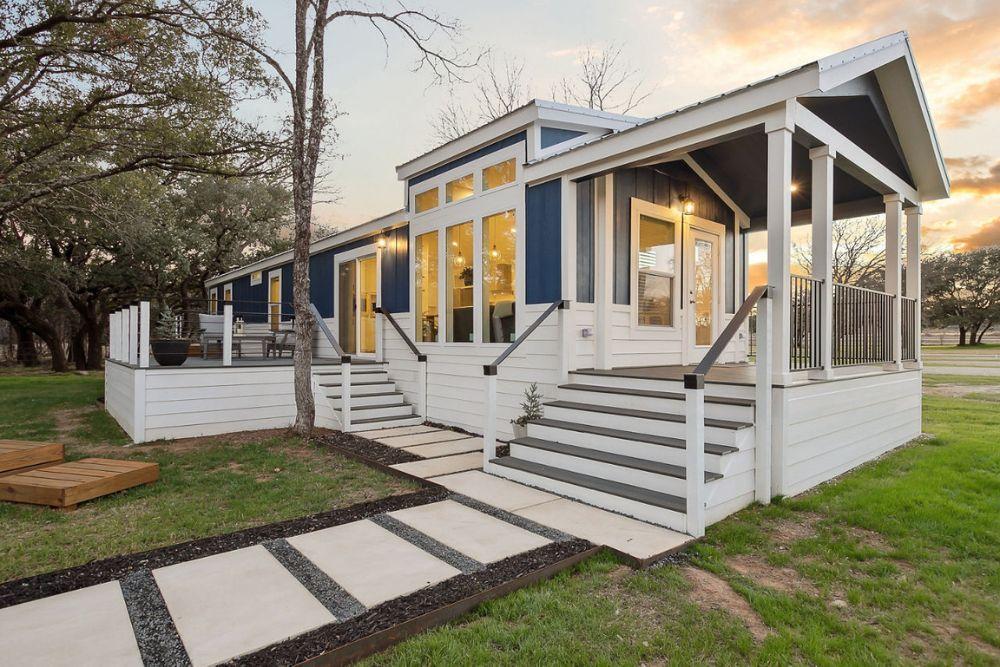
Ready to see your options? Browse our available manufactured homes here.
What Is a Prefab Home?
“Prefab” is short for prefabricated. It is a broad category that describes any home built partially or fully in a factory before being transported to a site. Prefab is not a single type of house; it is a construction method that includes several categories, such as modular and manufactured homes.
A common misconception is that “prefab” means low quality. In reality, factory construction is a major feature. Building in a climate-controlled environment ensures consistent quality and efficiency that traditional site-built homes often struggle to match.
What Is a Modular Home?
A modular home is built in 3D sections, or modules, within a factory. These sections are transported to your property and assembled by a crane on a permanent foundation. Once finished, these homes are considered real property, just like a traditional house.
Key distinguishing features include:
- Building Codes: They are built to state and local International Residential Code (IRC) standards—the same as stick-built houses.
- Completion: They usually arrive at the site 70–90% complete from the factory.
- Financing: They typically qualify for conventional 30-year mortgages.
- Value: Because they are real property, they have strong appreciation potential over time.
Modular Home Pros and Cons
Like any housing choice, modular homes have both benefits and disadvantages.
Pros:
- Built to the same high-standard IRC codes as traditional homes.
- Permanent foundations allow for traditional financing and easier resale.
- Fast build times compared to site-built construction.
Cons:
- Typically have a higher upfront cost than manufactured homes.
- Module sizes can sometimes limit design flexibility.
- Availability of builders can vary by region.
What Is a Manufactured Home?
Many people ask, “Are manufactured homes considered prefab?” The answer is yes. A manufactured home is factory-built to a federal HUD Code standard rather than local codes. These homes are transported to the site as a complete unit.
It is important to distinguish modern manufactured homes from pre-1976 “mobile homes”. Today’s homes are high-quality, HUD-regulated housing that bears little resemblance to the “trailers” of the past. You can find more details in our guide on 8 Tips for Buying a Mobile Home.
Key distinguishing features include:
- Standardized Quality: Every home is built to the rigorous federal HUD Code.
- Configurations: Available in single-wide, double-wide, and triple-wide layouts.
- Placement: They can be placed on pier-and-beam or permanent foundations.
- Affordability: They offer the most accessible entry point for families seeking security and community.
Manufactured Home Pros and Cons
Manufactured homes also come with their own set of advantages and disadvantages.
Pros:
- The most affordable factory-built option available today.
- Extremely fast move-in timelines for your family.
- Wide availability and flexible placement options across Texas.
Cons:
- Built to federal HUD standards rather than local IRC, which creates some financing nuances.
- Chattel loans (home-only loans) often carry higher interest rates than mortgages.
- Some HOAs or communities may restrict where they can be placed.
What is the Difference Between Modular and Prefab Homes, and How Do Manufactured Homes Compare?
When you are making a decision, it helps to see the practical breakdown of how these types of prefab homes stack up against each other.
Building Codes
Modular homes follow state and local IRC codes. Manufactured homes follow the federal HUD Code. For you, this means modular financing is often more straightforward, while manufactured homes may require specialized loan products.
Foundation and Permanence
Modular homes must always be on a permanent foundation. In Texas, manufactured homes can be on either permanent or pier-and-beam foundations. Whether a manufactured home is “real property” or “personal property” depends on how it is titled and the foundation type.
The Cost Differences
Manufactured homes are generally the most affordable way to own a home. Modular homes cost more, usually falling closer to site-built pricing. However, both are significantly more affordable than traditional stick-built construction.
The Financing Differences
Modular homes use conventional, FHA, and VA mortgages similar to site-built homes. Manufactured homes have options like FHA Title I and II, VA loans (if on a permanent foundation), and chattel loans. Braustin works closely with lenders who are experts in these specific manufactured home financing options.
Some wonder, “Why don’t banks like modular homes?” This is actually a misconception—banks treat modular homes exactly like site-built homes. It is manufactured homes that historically had more limited lending options, though that is changing.
Resale Value and Appreciation
Modular homes appreciate just like traditional homes. Manufactured homes also have strong appreciation potential, especially when you own the land and use a permanent foundation. Learn more about how long modular homes last and their long-term value here.
Which Type of Home Is Right for You?
The “right” choice depends entirely on your priorities:
- Budget-First Buyers: Manufactured homes offer the most affordable path to homeownership.
- Financing Simplicity: Modular homes align most closely with traditional bank processes.
- Land Owners in Texas: Both options are excellent, but manufactured homes are a particularly strong fit for rural Texas acreage.
- Building Equity: Both types can build equity; the key variable is owning the land beneath the home.
Braustin Has the Home of Your Dreams
Whether you choose modular or manufactured, you are choosing a high-quality, legitimate path to the American Dream. Prefab is the umbrella, and both branches offer a place your family can truly call home.
Ready to explore your options? Browse Braustin Homes’ manufactured and mobile homes or contact our team today to talk through what fits your budget and land situation.
Frequently Asked Questions About Prefab and Modular Homes
Q: Is a modular home the same as a prefab home? A: Modular homes are a type of prefab home, but not all prefab homes are modular. Prefab is the broader category.
Q: Are manufactured homes considered prefab? A: Yes. Manufactured homes are factory-built and fall under the prefab umbrella, though they are built to the federal HUD Code.\
Q: What’s cheaper: a modular or manufactured home? A: Manufactured homes typically have a lower purchase price. Modular homes tend to be priced closer to site-built homes, though both are more affordable than traditional builds.
Q: Can I get a regular mortgage on a prefab home in Texas? A: Modular homes qualify for conventional mortgages. Manufactured homes use specialized products like FHA, VA, and chattel options. Braustin works with lenders experienced in these specific areas.
About the Author
