


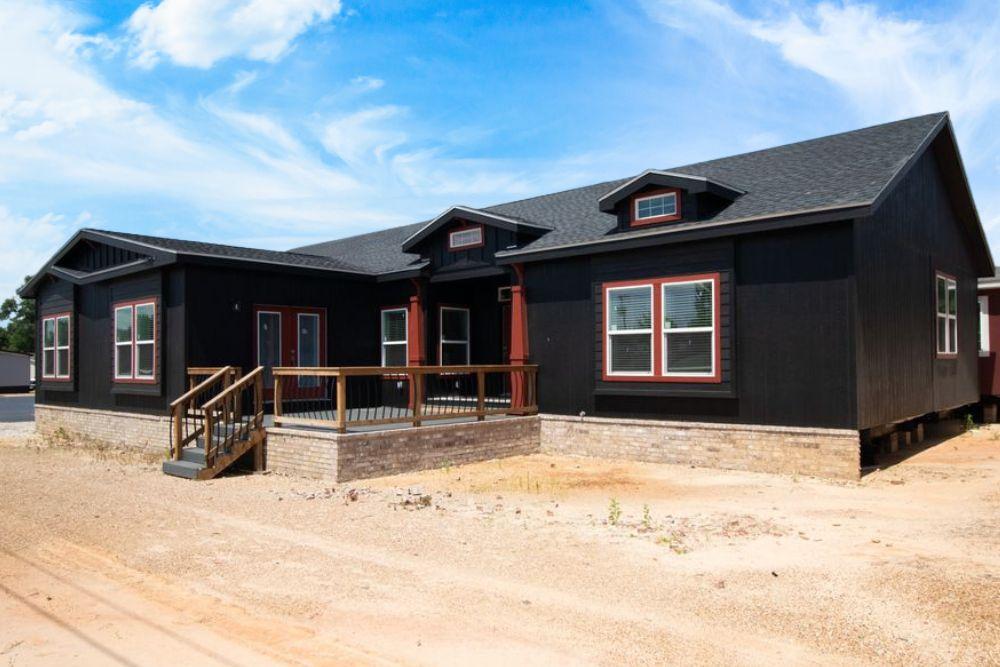
The price tag on a manufactured home stops people in their tracks. A new site-built home now averages $424,176 nationwide, while a new manufactured home averages $124,800 — a gap of nearly $300,000, according to 2024 Census Bureau data. But that number alone won’t make or break your decision. Zoning laws can block placement in entire zip codes. Financing rates on manufactured homes without land can run 1.5% to 5% higher than a conventional mortgage. And the old belief that manufactured homes automatically depreciate turns out to be flat wrong.
This guide gives you the specific numbers, the real trade-offs, and the questions to ask before you sign anything.
What You’re Actually Comparing
Before running any numbers, it helps to nail down the terminology — because “manufactured home,” “mobile home,” and “modular home” are not interchangeable, and confusing them leads to bad financial decisions.
A manufactured home is a factory-built residence constructed after June 15, 1976, on a permanent steel chassis. It must comply with the federal HUD Code (the Manufactured Home Construction and Safety Standards), which governs structural integrity, fire safety, energy efficiency, plumbing, and electrical systems. The HUD Code is a federal standard — it applies uniformly across every state, unlike local building codes, which vary dramatically by municipality.
A site-built home (sometimes called stick-built) is constructed entirely on its permanent lot, typically using wood-frame construction. It must meet local and state building codes, and construction is subject to weather, labor availability, and on-site inspections at each phase.
A modular home is factory-built in sections but assembled on-site to meet local building codes — not the HUD Code. Modular homes are legally treated as real property from day one, which gives them different financing and zoning treatment than manufactured homes.
Understanding the legal classification of a manufactured home matters because it drives zoning eligibility, loan type, and ultimately resale value. Our full breakdown of what makes a manufactured home different and our comparison of modular vs. mobile home differences cover this in depth.
The Real Price Gap: What the Numbers Actually Show
The 2024 Census Bureau data on new home sales makes the cost difference concrete:
| Home Type | National Average Price |
| New manufactured home | $124,800 |
| New site-built home | $424,176 |
That’s a savings of roughly $299,000 on the home itself — before land is factored in. On a per-square-foot basis, the gap is equally striking: manufactured homes average $55–$65 per square foot, while site-built homes average $168 per square foot nationally, according to the Texas Manufactured Housing Association’s 2024 analysis.
In Texas specifically, where Braustin operates, the cost to build a new site-built home ranges from $180 to $400+ per square foot depending on finish level and location. A 1,500-square-foot site-built home at $200 per square foot costs $300,000 in construction alone — before the lot.
Regional Price Snapshot for Manufactured Homes (2024)
Manufactured home prices vary by region due to land costs, transportation distances, and local market conditions. The South consistently offers the lowest prices, which is one reason Texas, Oklahoma, New Mexico, Louisiana, and Arkansas remain some of the most active manufactured housing markets in the country.
Single-wide homes in the South start around $75,000–$95,000. Double-wides — which provide 1,000 to 2,300 square feet and connect as two sections — typically range from $100,000 to $155,000 for the home unit alone. For a detailed breakdown by size, see our double-wide cost guide or browse single-wide homes currently in inventory.
What the Price Comparison Doesn’t Include
Sticker price comparisons almost always exclude land. A site-built home price typically includes the lot, while a manufactured home price usually does not. Add land, site preparation, utility hookups, and a permanent foundation, and the total cost of ownership rises significantly — though it still typically sits well below site-built costs in most markets.
Build Quality in 2026: Why “Trailer” Is an Outdated Word
The stigma attached to manufactured housing is rooted in the pre-1976 era, before federal construction standards existed. Today’s homes are a different product.
The HUD Code requires manufactured homes to meet minimums for wind resistance, thermal performance, fire safety, and structural load. Factory construction also solves a problem that plagues site-built projects: weather. Rain delays, material theft, and temperature-sensitive work (like drywall finishing or paint) don’t affect a factory floor. Every stage is inspected before the next begins.
Modern manufactured homes regularly include double-pane windows, high-density insulation, Energy Star-rated HVAC systems, and smart thermostats. Clayton Homes’ Ecobee integration, for example, can reduce heating and cooling costs by up to 23% annually. These aren’t upgrades on a base model — they’re standard features on many current builds.
If you want to understand exactly what the HUD Code requires, our guide to HUD standards for manufactured homes walks through each category. To compare today’s top manufacturers on quality metrics, our best manufactured home brands guide is the place to start.
The Four Cost Drivers That Determine Your Actual Price
Many buyers focus on the home price and miss the four variables that most determine total cost.
1. Land and Site Preparation
If you don’t own land, land acquisition is your biggest variable. Rural land in Texas and the Southwest offers the most favorable prices. Urban or suburban lots carry significantly higher costs and often come with zoning restrictions (covered below).
Site preparation includes foundation work, land grading, a driveway, and access to utilities. In San Antonio, for example, connecting to the city water system can cost $6,000–$10,000 in tap fees and impact charges alone — sometimes more, depending on the distance from existing infrastructure. Our guide to installing a mobile home in San Antonio covers permit, utility, and zoning requirements in detail. For buyers still searching for land, our guide to buying land for a new manufactured home covers zoning verification, utility access, and what to look for before you buy.
2. Financing: The Rate Gap Nobody Talks About
This is the single most overlooked cost driver in manufactured housing.
If you buy a manufactured home without land, most lenders classify it as personal property and offer a chattel loan. Chattel loans currently carry interest rates between 5.99% and 12.99%, and are typically 1.5% to 5% higher than conventional mortgage rates. On a $125,000 loan, a 3% rate difference adds roughly $200 per month — or $60,000 over 25 years.
If you buy or already own land and the home is permanently affixed to it, the home is classified as real property. Real property unlocks conventional mortgages, FHA Title II loans (with down payments as low as 3.5%), and VA loans (potentially 0% down for eligible veterans). These lower your monthly payment and your total interest paid by a substantial margin.
The practical takeaway: owning the land isn’t just about stability — it’s a financing strategy that can save tens of thousands of dollars. Our complete guide to financing a manufactured home and our breakdown of FHA, VA, chattel, and conventional loan options explain how to evaluate each path based on your situation.
3. Zoning: The Deal-Killer Most Buyers Discover Too Late
Not every parcel of land allows manufactured housing. Many municipalities — particularly inside city limits and HOA-governed neighborhoods — restrict or outright prohibit manufactured homes through zoning ordinances or deed restrictions.
Before you purchase land or commit to a lot, contact the local county or city zoning department directly. Ask whether manufactured homes are permitted on that specific parcel and whether there are minimum square footage, foundation type, or aesthetic requirements. Some areas permit manufactured homes only in designated communities. Others allow them on private land with no restrictions.
Skipping this step is the most common and costly mistake manufactured home buyers make. Discovering a zoning conflict after purchase can mean legal fees, relocation costs, or a stranded investment.
4. Transportation and Setup
A manufactured home is built in a factory and transported to your site. For a single-wide, transportation and setup typically runs $5,000–$8,000. For a double-wide, costs can reach $10,000–$13,000 or more depending on distance and access. These costs are real and should be included in your budget from the start.
The Resale Value Question: Myth vs. Data
The conventional wisdom — that manufactured homes depreciate while site-built homes appreciate — is not supported by recent data.
The Federal Housing Finance Agency (FHFA) tracked home price appreciation from 2000 to 2024. Manufactured homes appreciated 211.8% over that period. Site-built homes appreciated 212.6%. The difference is statistically negligible. The Urban Institute published similar findings, noting that manufactured homes and site-built homes have increased in value at nearly the same pace over multi-decade periods.
Since Q2 2014, manufactured homes have actually outpaced site-built homes in year-over-year appreciation in nearly every quarter — a trend driven in part by rising demand for affordable housing amid surging site-built construction costs.
The key variable is land ownership. A manufactured home on leased land has limited appreciation because the land (which drives most long-term value growth) belongs to someone else. Land prices rose 261% between 2012 and 2023, while structure prices rose only 49%. Owning the land your home sits on is how you capture that appreciation. This is one more reason the land question isn’t just practical — it’s financial.
For an honest look at where manufactured housing excels and where it has real limitations, see our pros and cons of buying a mobile home.
When a Manufactured Home Makes the Most Sense — And When It Doesn’t
A manufactured home is typically the better choice if:
- Your primary constraint is upfront cost or monthly payment
- You need to move in within weeks rather than months (factory builds are typically complete in 4–8 weeks, compared to 6–12+ months for site-built construction)
- You own land or can purchase rural land at an affordable price
- You’re in Texas, New Mexico, Oklahoma, Louisiana, or Arkansas, where land-and-home packages are common and zoning is relatively favorable
- You qualify for VA or FHA financing with land, which puts your all-in costs well below site-built alternatives
A site-built home may be the better fit if:
- You’re buying in a dense suburb with HOA restrictions or zoning that prohibits manufactured housing
- You need a highly customized architectural design that can’t be accommodated in standard manufactured floor plans
- You’re in a market where lot values dominate resale and manufactured housing is underrepresented in comparable sales
- Local lenders in your area don’t offer competitive manufactured home financing, making the rate gap more severe
Neither answer is universal. The right choice depends on where you’re buying, whether you own land, and what financing you qualify for.
Frequently Asked Questions
How much cheaper is a manufactured home than a site-built home?
Based on 2024 Census Bureau data, a new manufactured home averages $124,800 compared to $424,176 for a new site-built home — a difference of roughly $299,000. On a per-square-foot basis, manufactured homes average $55–$65 per square foot versus $168 per square foot for site-built construction. The total cost of ownership narrows when you add land, site preparation, and utility hookups, but a manufactured home still typically costs significantly less overall in most U.S. markets.
Do manufactured homes appreciate or depreciate in value?
Data from the Federal Housing Finance Agency shows manufactured homes appreciated 211.8% between 2000 and 2024 — nearly identical to site-built homes at 212.6%. Since Q2 2014, manufactured homes have outpaced site-built homes in year-over-year price appreciation in almost every quarter. The critical factor is land ownership: a manufactured home on owned land appreciates similarly to any other home. A home on leased land has limited appreciation potential because you don’t own the asset (land) that drives most long-term value growth.
What is the HUD Code and why does it matter?
The HUD Code — formally the Manufactured Home Construction and Safety Standards — is a set of federal construction regulations established in 1976 and enforced by the U.S. Department of Housing and Urban Development. It sets binding minimums for structural design, fire safety, energy efficiency, plumbing, electrical systems, and wind resistance. Every manufactured home built after June 15, 1976 must be HUD-certified before it can be sold. The HUD Code replaced a patchwork of inconsistent state standards and established a consistent national quality floor for manufactured housing.
What’s the difference between a chattel loan and a conventional mortgage for a manufactured home?
A chattel loan treats the manufactured home as personal property — similar to how a car is financed. These loans carry interest rates between 5.99% and 12.99%, typically 1.5% to 5% higher than conventional mortgages, with shorter terms that drive higher monthly payments. A conventional mortgage (or FHA/VA loan) becomes available when a manufactured home is permanently affixed to land the buyer owns, classifying it as real property. Real property loans offer lower rates, longer terms, and lower down payments — making land ownership a key financial strategy, not just a lifestyle preference.
Can you put a manufactured home anywhere in Texas?
No. Zoning laws, HOA covenants, and deed restrictions can all prohibit manufactured housing in specific areas. Inside most city limits, zoning for manufactured homes is uncommon — you’ll find the most permissive regulations in rural areas and in designated manufactured home communities. Before purchasing land, verify with the local county or city zoning department that manufactured housing is permitted on that specific parcel. Some municipalities also impose minimum size, foundation type, or exterior appearance requirements even in zones where manufactured homes are allowed.
How long does it take to build and move into a manufactured home?
Factory construction typically takes four to eight weeks from order to completion. After delivery, setup — including foundation work, utility connections, and inspections — typically adds two to four weeks, depending on site readiness and local permit timelines. Total time from order to move-in commonly runs eight to twelve weeks. By comparison, site-built home construction typically takes six to twelve months, and often longer in markets with labor shortages or permit backlogs.
What are the biggest hidden costs of buying a manufactured home?
The costs most buyers underestimate are: (1) site preparation, including land grading, foundation work, and utility hookups, which can run $10,000–$30,000 or more depending on lot conditions; (2) transportation and setup, typically $5,000–$13,000 depending on home size and distance; (3) financing rate premiums if buying without land (chattel loans can cost tens of thousands more in interest over the life of the loan); and (4) zoning and permit fees, which vary widely by jurisdiction. Building all of these into your budget from the start — not just the home price — prevents unpleasant surprises at closing.
Is a manufactured home a good investment?
It depends on your financial structure. A manufactured home on owned land, financed with a real property mortgage, behaves like most residential real estate investments — it appreciates, builds equity, and provides stable housing costs relative to renting. A manufactured home on leased land in a community carries more risk: you build no equity in the land, and you’re subject to lot rent increases and community policies that can affect resale. For most buyers focused on long-term value, pairing a manufactured home with owned land is the structure that makes it work as an investment, not just a housing cost.
About the Author
