


Texas writes more manufactured home policies than any other state in the country. That sounds like a buyer’s market — until you start shopping and discover that hail alleys run straight through the DFW Metroplex and South Plains, tornadoes touch down more than 135 times a year on average, and the Gulf Coast gets a direct or glancing hurricane hit on a multi-year cycle. Carriers price all of that into your premium, and many won’t write coverage at all on units older than 20 years.
Choosing the wrong policy doesn’t just mean overpaying. It means discovering gaps in your coverage the morning after a storm. This guide breaks down the four most widely available mobile home insurance providers in Texas — with specific data on financial strength ratings, J.D. Power scores, standout features, and documented drawbacks — so you can make a genuinely informed decision.
Why Mobile Home Insurance Is Non-Negotiable in Texas
Whether you’re financing your manufactured home through a chattel loan, FHA financing, or a conventional mortgage, your lender will require proof of insurance as a condition of the loan. That’s not a suggestion — it’s a contractual requirement.
Cash buyers face even higher stakes. If you’ve paid off your home entirely, you are your own lender. A fire, a direct tornado strike, or a Category 3 hurricane can erase your entire investment overnight. In coastal areas from Corpus Christi to Galveston, that risk is not theoretical.
Beyond lender requirements, Texas’s weather profile demands serious coverage:
- Tornadoes: Texas averages more than 135 tornadoes per year — the highest count in the country. Tornado Alley runs through North Texas and the South Plains. FEMA data consistently shows manufactured housing accounts for a disproportionate share of tornado fatalities nationally.
- Hurricanes: Hurricanes Harvey (2017), Ike (2008), and Beryl (2024) all caused widespread destruction of mobile home communities along the Texas coast. The Texas Windstorm Insurance Association (TWIA) exists specifically because private carriers won’t write wind and hail coverage in the 14 Tier 1 coastal counties without a state backstop.
- Hail: Hail is the single most common cause of mobile home claims in Texas. North Texas, the South Plains around Lubbock, and the San Antonio corridor all see multiple severe hail events per year.
- Wildfires: The Panhandle and West Texas face increasing wildfire exposure. The Smokehouse Creek Fire in February 2024 burned over one million acres — the largest wildfire in Texas history — and destroyed mobile home communities in Hemphill and Roberts Counties.
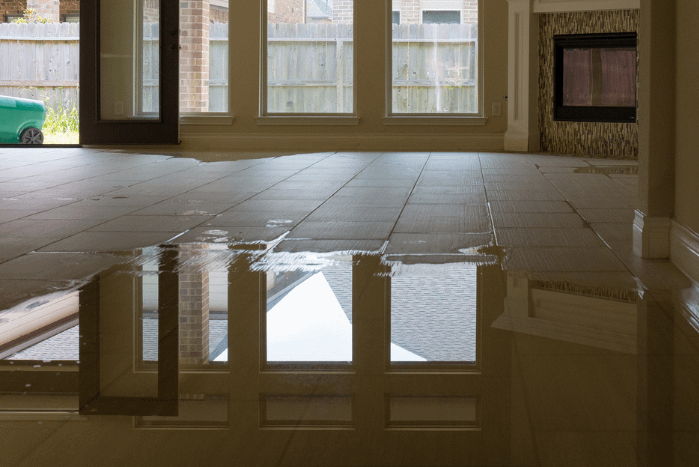
- Flooding: Standard manufactured home insurance does not cover flood damage. Ever. If you live in Houston’s bayou system, the Hill Country flash-flood zone, or the lower Rio Grande Valley, you’ll need a separate policy through the National Flood Insurance Program (NFIP) or a private flood insurer.
Best Mobile Home Insurance Companies in Texas
The four carriers below all currently write mobile home coverage across Texas. They take meaningfully different approaches to coastal risk, older units, and coverage structure. Use the distinctions below — not generic superlatives — to find the right fit.
Foremost: Best Overall for Texas Mobile Home Owners
A.M. Best: A | J.D. Power Score: 868/1,000 (2024 U.S. Home Insurance Study — highest among specialty manufactured home carriers)
Foremost, a subsidiary of the Farmers Insurance Group, claims to be the first company to ever insure a mobile home — and it shows in the policy design. Several features make it stand out specifically for Texas owners:
- Extended replacement cost up to 120% of your policy limit. After Hurricane Harvey and again after Hurricane Beryl, Texas saw post-disaster construction inflation spike sharply. Foremost’s extended replacement cost provision means you won’t come up short because lumber and labor costs surged after a regional disaster.
- Accepts older mobile homes. If your unit was built in the late 1980s or 1990s and you’ve been turned down by Allstate or Farmers, Foremost is often the carrier that says yes. Carriers like Assurant and State Farm typically won’t insure units over 15–20 years old without inspections or significant exclusions.
- AARP member discounts. If you’re 50 or older, Foremost’s partnership with AARP — which covers 37 million members — can meaningfully reduce your annual premium.
- Works with lower credit scores. Texas insurers use credit-based insurance scores to set rates. Foremost is more flexible here than most competitors.
Key limitation: Foremost does not offer real-time online quotes. Quote requests can take up to 24 hours through an agent, which slows comparison shopping.
Assurant: Best for the Most Comprehensive Standard Coverage
A.M. Best: A | J.D. Power Score: Not rated
Assurant’s primary differentiator is what’s already included in the standard policy — no upselling required. Most manufactured home insurers either exclude certain perils entirely or sell them as paid endorsements. Assurant bundles several into your base coverage:
- Hurricane and earthquake coverage built in — not as an add-on
- Replacement cost on both dwelling AND personal property as a standard feature (most carriers charge extra for personal property replacement cost)
- Flood coverage included in standard policies — a rare exception to the industry norm
- Other structures coverage extending to nearby sheds, fences, and standalone garages
Assurant has also partnered with GEICO, Liberty Mutual, and Progressive to expand access to their policies, which can simplify bundling if you’re already insured through one of those carriers.
Key limitation: Quotes are only available by phone (7 AM–7 PM Eastern), and there’s no mobile app for policy management — a practical inconvenience for homeowners who prefer digital access.
If you want to learn more about what any of these coverages actually protect, our complete guide to mobile home insurance walks through each coverage type in detail.
State Farm: Best for Bundling and Agent Relationships
A.M. Best: A++ (Superior — highest possible financial stability rating) | J.D. Power Score: 657/1,000 (2025 U.S. Home Insurance Study, above industry average)
State Farm is the largest insurer in the U.S. by market share, and its financial strength rating is unmatched in this category. For Texas manufactured home owners who want a single carrier managing all their policies — home, auto, life — State Farm is the strongest bundling option.
Specific features worth noting for Texas owners:
- Manufactured home model year discounts — a direct incentive for buying a newer HUD-code home
- Earthquake and volcanic explosion coverage available as an endorsement (useful for West Texas owners near oilfield injection activity)
- Bundling discounts that can stack across manufactured home, auto, motorhome, and off-road vehicle policies
- Extensive local agent network across Texas, from the Panhandle to the Rio Grande Valley
Key limitation: State Farm’s J.D. Power scores for complex, multi-peril claims trail those of specialty manufactured home carriers. Customer reviews indicate straightforward claims (fire, single-storm events) close quickly, but multi-peril losses require more follow-up.
Allstate: Best for Retirees and Customizable Coverage
A.M. Best: A+ | J.D. Power Score: 854/1,000
Allstate is the fourth-largest property/casualty insurer in the United States, and its manufactured home policy is one of the most customizable in the Texas market. Several features are worth calling out specifically:
- Retiree discount for policyholders 55 and older — this stacks with the original-titleholder discount, so if you purchased your home new and have held it since, you can pull two age-related rate reductions from one policy.
- Optional coverages including personal property endorsements for higher-value items, green improvements reimbursement, sports equipment, musical instruments, and electronic data recovery
- Claim RateGuard — an optional feature that prevents your premium from increasing after a single claim
- Mine subsidence coverage in Texas — relevant for East Texas lignite belt and West Texas oil basin areas where ground movement is a real concern
Key limitation: Allstate does not offer instant online quotes for manufactured home policies. Coverage experience can also vary by agent, so vetting your local rep matters more with Allstate than with a direct-to-consumer carrier.
What Mobile Home Insurance Actually Covers in Texas
Regardless of which carrier you choose, a standard manufactured home policy contains four primary coverage components:
Dwelling Coverage pays to repair or rebuild your home’s structure after a covered loss — fire, windstorm, hail, lightning, vandalism, or falling objects. Your limit should reflect the replacement cost of your home at today’s prices, not what you originally paid for it. Construction costs in Texas have risen sharply since 2020, and underinsuring to save on premium can cost you tens of thousands after a claim.
Personal Property Coverage protects your furniture, electronics, clothing, and appliances. Standard policies often cap high-value items like jewelry or firearms at $1,000–$2,000 — add a rider if your possessions exceed those limits.
Liability Protection covers legal fees and damage awards if someone is injured on your property. Most policies start at $100,000, but given how Texas civil courts have handled damage awards, $300,000 is a more appropriate baseline for most owners.
Loss of Use Coverage (also called additional living expenses) pays for temporary housing, meals, and related costs if your home becomes uninhabitable after a covered event. This coverage prevents the double burden of paying both your mortgage and emergency lodging simultaneously.
What Texas Mobile Home Insurance Does NOT Cover
These exclusions regularly catch homeowners off guard:
- Flood damage — always excluded from standard policies; requires a separate NFIP or private flood policy
- Wind and hail in the 14 Tier 1 coastal counties — requires a separate Texas Windstorm Insurance Association (TWIA) policy
- Earthquake damage — available as an add-on; relevant in West Texas near oilfield injection zones
- Normal wear and tear — a hailstorm-damaged roof is covered; a roof damaged by 20 years of deferred maintenance is not
- Pest infestations and mold — termite damage, rodent infestations, and mold (unless caused by a covered peril) are maintenance issues, not insurable events
- Business-related damage — if you operate a business from your mobile home, damages tied to that activity require a commercial policy
Understanding exclusions before you buy protects you from the worst outcome: filing a large claim and discovering a gap you didn’t know existed.
Key Factors That Drive Your Premium in Texas
Your annual premium isn’t arbitrary. These variables control most of what you’ll pay:
- Home age — Units built before the 1976 HUD Code cost significantly more to insure and may be ineligible with some carriers
- Location and ZIP code — Gulf Coast premiums can run $3,200/year or more; West Texas and the Permian Basin typically come in well below average
- Foundation type — Homes on permanent foundations qualify for better rates than those on blocks or piers; this is one of the few variables you can control
- Deductible structure — Texas policies often apply a percentage-based wind/hail deductible (commonly 1%–5%). On a $150,000 home, a 2% deductible means $3,000 out of pocket before any insurer payout — a number that surprises many first-time buyers
- Credit score — Texas insurers use credit-based insurance scores; a stronger score means lower premiums. Paying down balances and correcting credit report errors before shopping can produce measurable savings
- Coverage limits — Higher dwelling limits, lower deductibles, and added endorsements all increase your premium; each represents a deliberate trade-off
Average annual premiums in Texas currently run between $1,000 and $3,200, with coastal properties at the high end and inland West Texas properties often well below $1,200.
How to Lower Your Mobile Home Insurance Costs Without Cutting Coverage
These tactics produce real savings without removing meaningful protection:
- Bundle policies. Most carriers offer 10%–25% discounts when you combine manufactured home, auto, and life coverage under one provider. State Farm offers the strongest bundled pricing among the four carriers reviewed here.
- Install safety features. Smoke detectors, security systems, fire extinguishers, and wind-resistant tie-downs all qualify for discounts with most carriers.
- Raise your AOP (all other perils) deductible while keeping the wind/hail deductible at the lowest available percentage. Most Texas mobile home claims stem from wind and hail; the AOP deductible rarely gets used. Raising it from $500 to $1,500 cuts your premium with minimal added risk.
- Secure your home to a permanent foundation. This upgrade unlocks better insurance rates, qualifies you for conventional mortgage financing, and improves resale value.
- Get at least three quotes. Premiums for identical coverage can vary by $800 or more between carriers in the same Texas ZIP code.
Insurance Considerations: Leased Land vs. Owned Land
Where your home sits directly affects your coverage needs:
- If you lease land in a mobile home community, your policy covers the structure and your personal belongings — not the land, since you don’t own it. Many Texas parks, especially larger corporate-managed communities in the DFW Metroplex, Austin, and Houston, require owners to maintain specific coverage levels as a lease condition. Confirm those requirements before buying your policy.
- If you own the land, your policy can cover the entire property, including land improvements and outbuildings. This also typically qualifies you for lower insurance rates and better financing terms, particularly if the home is on a permanent foundation.
- If you’re still weighing the land question, our guide on leasing versus owning land for a manufactured home walks through the financial and practical trade-offs in detail.
How to Find the Right Coverage: A Practical Action Plan
Before calling a single insurance company, do this preparation:
- Calculate your home’s replacement cost — not its market value, not what you paid. If you’re buying a new manufactured home, your Braustin housing consultant can provide replacement cost estimates.
- Inventory your personal property — photograph everything, record serial numbers, and store the file somewhere outside your home. After catastrophic events like the Smokehouse Creek Fire, documented claims move significantly faster.
- Assess your location-specific risks — coastal owners need TWIA policies; flood-prone areas need NFIP coverage; West Texas owners near oilfield activity should consider earthquake endorsements.
- Request quotes from at least three carriers — provide identical coverage specifications to each so comparisons are apples-to-apples.
- Read the policy before signing — verify coverage limits, exclusions, deductible structure, and any special conditions. The fine print on a wind/hail deductible percentage is exactly where costly surprises hide.
- Review coverage annually — after home improvements, major purchases, or changes in your home’s market value, your coverage limits may need to be adjusted.
Frequently Asked Questions
Q. How much does mobile home insurance cost in Texas?
A. Annual premiums for mobile home insurance in Texas currently range from approximately $1,000 to $3,200, depending on location, home age, coverage limits, and deductible structure. Gulf Coast homes in the 14 Tier 1 coastal counties sit at the high end of that range; inland West Texas homes often come in well below $1,200 per year. Hail-exposed markets like DFW, Houston’s inland suburbs, and San Antonio fall in the middle. Obtaining quotes from at least three carriers with identical coverage specifications is the only way to get an accurate number for your specific home and ZIP code.
Q. Is mobile home insurance required by law in Texas?
A. Texas law does not require mobile home insurance. However, if you’re financing your home, your lender will require it as a condition of the loan — whether you’re using a chattel loan, FHA financing, VA financing, or a conventional mortgage. Additionally, many Texas mobile home communities require tenants and owners to maintain coverage as a lease condition. Given the state’s severe weather exposure, carrying coverage even when not contractually required is a straightforward financial risk decision.
Q. Does standard mobile home insurance cover hurricane damage in Texas?
A. Partially. Standard policies cover wind damage from hurricanes for homes located outside the 14 Tier 1 coastal counties. For homes within those counties — which stretch from Beaumont down to Brownsville — private carriers typically exclude wind and hail damage, and you’ll need a separate Texas Windstorm Insurance Association (TWIA) policy to cover it. Regardless of location, flood damage from hurricanes is excluded from all standard mobile home policies. Separate flood coverage through the National Flood Insurance Program (NFIP) or a private insurer is required to close that gap.
Q. What is a percentage-based wind/hail deductible, and how does it affect me?
A. Unlike a flat dollar deductible (e.g., $1,000), a percentage-based wind/hail deductible is calculated as a percentage of your dwelling coverage limit. Texas mobile home policies commonly apply 1% to 5% wind/hail deductibles. On a home insured for $150,000, a 2% deductible means $3,000 out of pocket before the insurer pays anything on a wind or hail claim. Because wind and hail are the most common sources of mobile home claims in Texas, this number deserves careful attention when comparing policies. Lower percentages generally mean higher premiums — but higher premiums on a $150 or $200/month policy is often a better trade than a $5,000–$9,000 out-of-pocket surprise after a storm.
Q. Can I get mobile home insurance if my home is older than 20 years?
A. Yes, but your options narrow considerably. Many standard carriers — including some large ones — will not insure mobile homes older than 15–20 years without inspections, significant exclusions, or outright rejection. Foremost is the most flexible carrier on this list for older units, accepting homes from the late 1980s and 1990s that other carriers decline. American Modern also has a history of insuring older and non-standard units. If your home is pre-1976 (before the HUD Code established construction standards), your options narrow further and premiums will be higher across the board. Be honest about your home’s age and condition when requesting quotes — misrepresentation at the application stage is grounds for claim denial.
Q. Is a mobile home considered real or personal property in Texas?
A. In Texas, a manufactured home is initially classified as personal property. However, it can be reclassified as real property when it is permanently affixed to land that is owned by the homeowner and the appropriate title conversion is completed through the Texas Department of Housing and Community Affairs. This reclassification matters for insurance purposes: homes classified as real property on owned land typically qualify for lower rates and better financing options, including conventional mortgages. If you’re weighing whether to pursue this conversion, our team at Braustin can walk you through the practical and financial implications.
Q. What is the Texas Windstorm Insurance Association (TWIA) and do I need it?
A. The Texas Windstorm Insurance Association is a state-created insurer of last resort that provides wind and hail coverage in the 14 Tier 1 coastal counties where private carriers do not write that coverage. If your manufactured home is located in Aransas, Brazoria, Calhoun, Cameron, Chambers, Galveston, Jefferson, Kenedy, Kleberg, Matagorda, Nueces, Refugio, San Patricio, or Willacy County, you almost certainly need a TWIA policy in addition to your standard homeowners policy. A TWIA policy covers only wind and hail — not fire, theft, liability, or other standard perils. Your standard policy covers everything else. Together, the two policies provide complete coverage for coastal Texas homeowners.
Q. What should I do if I’m shopping for both a home and insurance at the same time?
A. Start with your home purchase and use the replacement cost estimate from your retailer as the foundation for your insurance shopping. At Braustin Homes, our housing consultants can provide replacement cost figures for the specific model you’re considering, which gives you accurate data to take to insurers. From there, collect quotes from at least three carriers before binding any policy, and factor the annual insurance cost into your overall budget from the beginning — not as an afterthought. Our home insurance basics guide walks through every step of the coverage selection process if you want to go deeper before reaching out.
Ready to take the next step toward owning a manufactured home in Texas? Browse our current inventory of homes and connect with a Braustin housing consultant who can help you understand total costs of ownership — including insurance — before you commit to anything.
About the Author
