


The Senate Just Removed the Biggest Barrier to Manufactured Housing. Here’s Why It Matters.
For years, the manufactured housing industry has been building homes that rival site-built construction in quality, efficiency, and design. What we haven’t had is a policy that treats them that way.
That just changed.
On March 12, 2026 the Senate passed the 21st Century ROAD to Housing Act with an overwhelming 89-10 bipartisan vote. Buried inside the bill is a provision that most people will overlook — but for anyone in housing, it’s the most significant policy shift in nearly 50 years: the elimination of the permanent chassis requirement for manufactured homes.
What the Chassis Requirement Actually Did
Since 1976, federal law has required every manufactured home to be built on a permanent steel chassis. On the surface, it sounds like a construction detail. In practice, it created a wall between manufactured homes and everything else in housing.
That one requirement forced manufactured homes to be classified as personal property — like a vehicle — rather than real property, like a house. And that classification quietly shaped every part of the home buying experience:
- Financing: Because manufactured homes were classified as personal property, most buyers were pushed into chattel loans — higher interest rates, shorter terms, fewer protections. A buyer paying as high as 9-10% on a chattel loan for a manufactured home could have been paying in the range of 6-7% on a conventional mortgage for the same square footage. On a $150,000 home, that kind of gap can mean hundreds of dollars a month.
- Appraisals: The chassis created a “movable” stigma that made it difficult for manufactured homes to appraise alongside site-built neighbors, suppressing home values and limiting equity growth for owners.
- Zoning: Local governments used the chassis — and the personal property classification that came with it — as justification for restricting where manufactured homes could be placed.
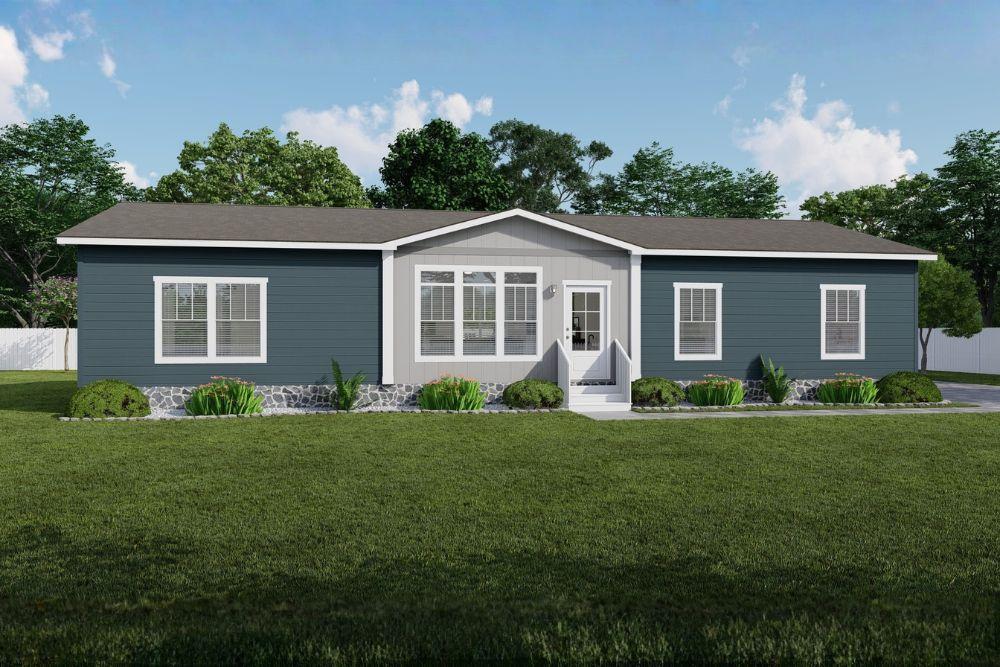
- Perception: Here’s the part nobody talks about: the biggest visible difference between a manufactured home and a site-built home is the three steps up to the front door. That elevation exists because of the chassis sitting underneath. Remove the chassis, put the home on a permanent foundation, and that distinction disappears. The home looks like every other house on the street.
Why This Changes Everything
Removing the chassis requirement doesn’t just change a construction spec. It removes the single biggest obstacle to changing the category.
Today, because manufactured homes must sit on a steel chassis, most states classify them as personal property — regardless of whether the home is permanently installed. The ROAD Act eliminates that federal requirement and directs states to certify that homes built without a chassis and placed on permanent foundations won’t be treated differently from site-built homes. That’s not an automatic switch — property classification is governed by state law — but it opens a door that has been sealed shut since 1976.
As states align their laws, manufactured homes on permanent foundations become eligible to be titled as real property. Real property qualifies for FHA, conventional, and VA mortgage products. That means traditional banks and mortgage lenders — institutions that have largely stayed out of manufactured housing — would have a reason to enter the space.
More lenders means more competition. More competition means better rates and terms for buyers. Better financing means buyers can afford more home, or pay less for the same one. And when homes are financed through conventional mortgages, they have to meet appraisal standards benchmarked against site-built homes in the area. That creates a quality floor that benefits everyone.
This is the cycle the chassis requirement has been blocking for 50 years. The ROAD Act doesn’t complete it overnight, but it removes the federal barrier that has prevented it from starting.
What the Bill Doesn’t Do
The ROAD Act explicitly does not preempt local zoning authority. That means the roughly 33,000 local jurisdictions that currently restrict manufactured home placement can continue to do so. This is a real limitation — you can build a better, more affordable home, but if local zoning says it can’t go on a particular lot, the policy change alone won’t solve that.
That said, the chassis removal weakens the strongest argument those jurisdictions have been relying on. When a manufactured home sits on a permanent foundation and looks identical to the house next door, the case for excluding it from a neighborhood gets a lot harder to make. And if financing parity follows — which it should, over time — the distinction disappears entirely.
What This Means for the Industry
- For Manufacturers: This is a signal to invest in design and build quality that competes directly with site-built homes. The homes that win in a post-chassis world will be the ones that appraise well, finance easily, and integrate seamlessly into existing neighborhoods.
- For Buyers: This has the potential to be the most meaningful affordability improvement in decades — not because homes got cheaper, but because the path to better financing just opened up.
- For the Industry: This is validation. Manufactured housing isn’t an alternative anymore. It’s a solution.
Where Braustin Stands
Braustin remains committed to one thing: helping families become homeowners. The affordability conversation is more important now than it has ever been, and we believe every family deserves transparency — in pricing, in process, and in what’s possible.
If you want to own a home, we want to help you get there. That’s it. No fine print, no bait-and-switch.
The three steps just disappeared. The playing field just got level. And the American dream? It’s still alive and strong. It just might be delivered.
The American Dream, Delivered.
About the Author
