


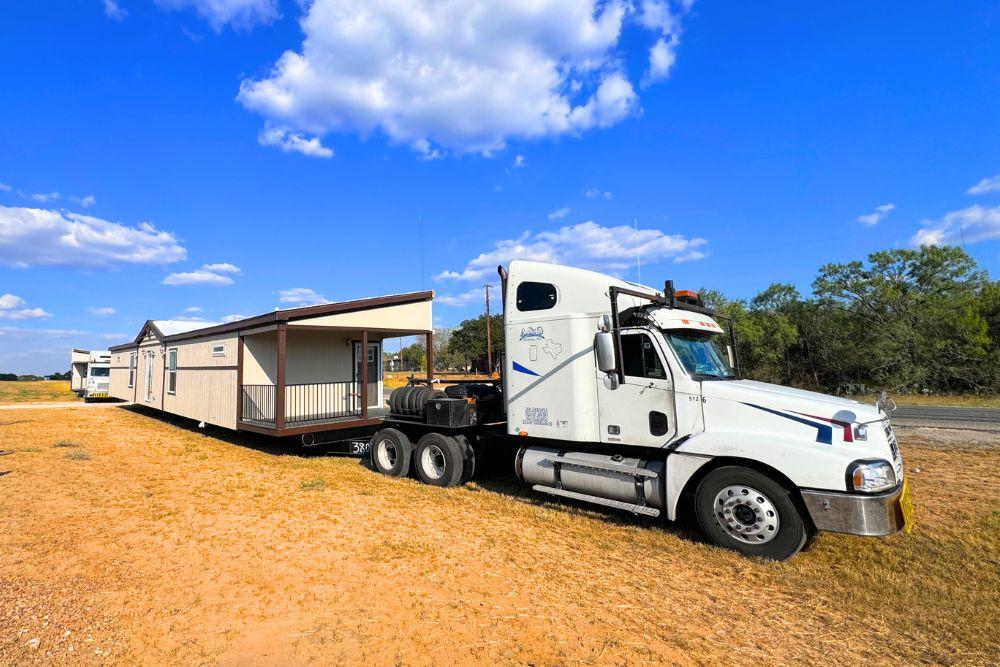
You’ve found the perfect new lot—maybe it’s closer to family, offers more land, or puts you in a better school district. The problem? Your manufactured home is already installed, and moving it won’t be cheap.
Many homeowners are blindsided by the real cost of relocating a mobile home. The number on a moving company’s website rarely reflects what you’ll actually pay when permits, site prep, utility reconnections, and potential repairs are factored in. This guide breaks down the true, all-in cost to move a mobile home—including the line items most articles skip—so you can budget accurately and decide whether moving makes financial sense.
Quick answer: Expect to pay between $4,000 and $8,000 for a single-wide transport-only move under 60 miles, and anywhere from $15,000 to $30,000+ for a full-service move of a double-wide covering 100+ miles. The full picture is more nuanced—and more expensive—than most people anticipate.
Why Moving a Manufactured Home Is Not a Simple Haul
It’s worth starting with a frank reality check: a manufactured home is not a camper. Once installed, it’s a permanent structure with utility connections, a foundation, skirting, and often attached structures like porches or decks. As we note in our pros and cons guide, the term “mobile home” is largely historical—modern manufactured homes are built for permanency, not mobility. Moving one requires licensed contractors, state permits, specialized towing equipment, and careful coordination from start to finish.
That complexity is the reason costs vary so dramatically. Two homeowners moving the same model 60 miles apart can receive quotes that differ by $10,000 or more, depending on the condition of the home, road permits, and whether setup services are included.
Transport-Only vs. Full-Service Moves: What Each Covers
Before diving into numbers, you need to understand that quotes from moving companies typically fall into two categories—and the difference in scope is significant.
Transport-Only Moves
A transport-only move covers exactly what it sounds like: the moving company attaches your move-ready home to a towing vehicle, hauls it to the new site, and detaches it upon arrival. Required transit permits and liability insurance are typically included.
What’s not included:
- Disconnecting or reconnecting utilities
- Removing skirting, porches, or decks before departure
- Re-installing skirting, steps, or attached structures at the new site
- Foundation preparation at the destination
Typical cost range for a transport-only move:
- Single-wide, under 60 miles: $1,000–$3,500
- Double-wide, under 60 miles: $3,000–$7,000
- Triple-wide, under 60 miles: $5,000–$10,000
Transport-only is the most affordable option, but it requires you to hire separate contractors for disconnection, site prep, and reconnection—costs that add up quickly.
Full-Service Moves
A full-service moving company handles the entire relocation: disconnecting utilities, removing skirting and attached structures, hauling the home, setting it on its new foundation, reconnecting utilities, and reinstalling skirting and steps.
Typical cost range for a full-service move:
- Single-wide, up to 60 miles: $4,000–$8,000
- Double-wide, up to 60 miles: $8,000–$15,000
- Triple-wide, up to 60 miles: $12,000–$25,000
- Any home, 100+ miles: $15,000–$30,000+
Full-service moves cost more upfront but reduce the coordination burden on the homeowner and minimize the risk of costly mistakes during disconnection or setup.
Complete Cost Breakdown by Line Item
Understanding every cost category prevents budget surprises. Here’s what to account for beyond the base moving quote.
Transportation Fees
Most licensed mobile home movers charge per mile, typically $4.00 to $5.50 per mile for the towing vehicle alone. For a 100-mile move, that’s $400–$550 just for the tow—before labor, permits, or setup. Long-distance moves crossing multiple states regularly exceed $20,000 due to multi-state permit requirements and the need to hand off the home to a different licensed driver at each state line.
Permits and Inspections
Every state requires transit permits to move a manufactured home on public roads, and most require installation permits at the new site. In Texas, licensed installers must hold a license through the Texas Department of Housing and Community Affairs (TDHCA). Permit costs typically range from $200 to $800, though complex moves through multiple jurisdictions can cost more. Some states also require a pre-move inspection to verify the home is structurally sound for highway transport—budget $200–$400 for this.
Foundation and Site Preparation at the New Location
This is the line item most moving company quotes don’t include—and it’s often the biggest surprise. Before your home can be set, the new site must be cleared, leveled, and equipped with a proper foundation.
Based on Texas market data:
- Site clearing and grading: $2,000–$5,000
- Caliche base pad (conventional/cash financing): $2,500–$5,000
- Concrete runners (required for FHA/VA loans): $6,500–$10,000
- Pier and beam foundation: A few thousand dollars, but not accepted everywhere
For a deeper look at what a foundation involves, read our mobile home pad requirements and cost guide.
Utility Connections
Disconnecting utilities at the origin is usually straightforward and often free. Reconnecting them at the new site is a different story. Depending on how far your new lot sits from existing infrastructure, utility hookup costs range from $2,000 to $10,000 or more. Rural sites that require a well or septic system will fall toward the high end—or exceed it entirely.
For a detailed breakdown of what utility hookup involves, visit our site preparation guide.
Setup and Installation Labor
After delivery, a crew must level the home, secure it to the foundation, connect utilities, and install skirting and steps. Installation labor typically runs $3,000–$7,000, though double-wide homes require more crew time due to the trim-out process—sealing the two halves together, finishing interior seams, and completing exterior trim. This step alone can add a week to your timeline.
Escort Vehicles
Wider homes—particularly double-wides and triple-wides—may legally require escort vehicles to manage traffic and navigate tight routes. Escort vehicles typically cost $1.50–$3.50 per mile per vehicle. A 100-mile move requiring two escorts adds $300–$700 to your total.
Pre-Move Repairs
Moving companies inspect your home’s structural integrity before providing a quote. Older homes with deteriorated framing, flat tires, or damaged axles may require repairs before a mover will accept the job. These repairs can range from a few hundred dollars for tire and axle work to several thousand for structural reinforcement. Skipping necessary repairs isn’t an option—an unsound home is a liability hazard on the highway.
Quick-Reference Cost Summary Table
|
Home Type |
Transport-Only (≤60 mi) |
Full-Service (≤60 mi) |
Full-Service (100+ mi) |
|
Single-Wide |
$1,000–$3,500 |
$4,000–$8,000 |
Up to $15,000 |
|
Double-Wide |
$3,000–$7,000 |
$8,000–$15,000 |
$20,000+ |
|
Triple-Wide |
$5,000–$10,000 |
$12,000–$25,000 |
$30,000+ |
Note: These figures cover transport and setup only. Add $10,000–$30,000+ for site preparation, foundation, and utility connections at the new location.
Legal Requirements: What You Must Have Before Moving Day
Moving a manufactured home without the proper documentation exposes you to fines, permit denials, and legal liability. Here’s what you need in order:
- Transit permit from your state’s DOT or equivalent agency—required in every state the home travels through
- Installation permit from the destination county or city, covering building, electrical, and plumbing
- Home title and proof of insurance — most counties require these at the permit office
- Licensed installer — in Texas, all manufactured home installations must be performed by a TDHCA-licensed installer
- Structural inspection — required in some states before the move to verify highway safety
Your moving company should manage permit acquisition as part of their service. If they can’t confirm they’ll handle permits, that’s a red flag.
DIY Moves: Why They Almost Never Make Sense
The appeal of a DIY move is obvious—cut out the middleman and save thousands. In practice, it rarely works out that way.
Transporting a manufactured home on public roads typically requires a commercial driver’s license (CDL), an oversize load permit, and liability insurance that covers the home during transit. Most states prohibit unlicensed individuals from towing manufactured homes on public roads, period. Beyond legality, the equipment required—specialized towing rigs, tie-down systems, and hitching hardware—is not available at your local rental yard.
There is meaningful DIY work you can do to reduce costs:
- Disconnect utilities yourself before the moving company arrives (check local codes first)
- Remove skirting, steps, and deck structures that aren’t structurally integrated
- Handle touch-up repairs and painting after the home is set at the new location
For anything involving the transport itself or foundation installation, hire licensed professionals. The site preparation process alone requires expertise that takes years to develop.
How to Save Money on a Mobile Home Move
Cost reduction starts with smart planning, not cutting corners on safety.
- Get a minimum of three quotes. Moving company pricing varies significantly, and the cheapest bid isn’t always the best value—but neither is the most expensive. Ask each company for a line-item breakdown so you’re comparing equivalent services.
- Move during the off-peak season. Most moving companies are busiest in summer. Scheduling your move between November and February often yields lower rates and better scheduling availability.
- Prepare your home in advance. Remove skirting, steps, awnings, and any loose fixtures before the crew arrives. Delays caused by unprepared homes translate directly into higher labor costs.
- Minimize distance when possible. Every additional mile adds cost—both in per-mile transport fees and in the complexity of permits. If you have flexibility on the destination, choose the closest suitable site.
- Assess the home honestly before committing. If your manufactured home requires significant structural repairs before it can be moved, run the numbers carefully. In many cases, the cost of moving an older home—transport, repairs, site prep, and setup—exceeds the value of the home itself.
- When Moving May Not Be the Right Answer
This is the conversation most moving-cost guides skip: sometimes, the math doesn’t work in favor of a move.
Single-wide homes in good condition are the clearest candidates for relocation—transport costs are lower, the logistics are simpler, and the process is well-understood. Double-wide and triple-wide moves are significantly more complex, and when you add the full cost of setup at the new site, it’s common for total expenses to land at $30,000–$50,000 or more.
At that cost, many homeowners find it more financially sound to browse available land-home packages where the home and installation are coordinated from the start—avoiding the wear, risk, and logistics of moving an already-installed structure. Alternatively, if your home is aging and you’re planning a significant investment in a move anyway, it may be worth applying that budget toward a new manufactured home that comes with full warranty coverage and modern HUD safety standards.
For a broader look at total manufactured home ownership costs, our guide on budgeting for a mobile home purchase walks through every financial consideration from purchase to move-in.
Key Takeaways
- Transport-only moves cost $1,000–$10,000 depending on home size and distance; full-service moves range from $4,000 to $30,000+
- Site preparation and foundation work at the new location adds $10,000–$30,000+ on top of transport costs
- Permits are mandatory—budget $200–$800 and ensure your moving company handles acquisition
- DIY transport is rarely legal or practical; focus DIY effort on pre-move prep tasks instead
- Get three itemized quotes and verify each company’s USDOT licensing and insurance coverage
- Always budget a 10–20% contingency fund for unexpected costs
If you’re evaluating whether a move makes sense for your situation, our team at Braustin Homes is here to help you think it through. Contact us to speak with a housing consultant who can walk you through your options—whether that’s coordinating a relocation or exploring new homes that fit your budget and land.
Frequently Asked Questions
Q. How much does it cost to move a single-wide mobile home?
A. Moving a single-wide manufactured home typically costs between $4,000 and $8,000 for a full-service move covering up to 60 miles, or $1,000–$3,500 for a transport-only move over the same distance. For moves exceeding 100 miles, costs can reach $15,000 when permits, labor, and setup are included. Keep in mind that site preparation and foundation work at the destination—typically $5,000–$15,000—is not included in most moving company quotes.
Q. How much does it cost to move a double-wide mobile home?
A. A double-wide move is more expensive because it often requires two separate towing vehicles, a larger foundation, and a trim-out process to seal the two halves after delivery. Full-service moves for double-wides covering up to 60 miles typically run $8,000–$15,000, while long-distance moves can easily exceed $20,000. Total project costs including site prep and utility connections frequently land between $25,000 and $45,000.
Q. What permits are required to move a manufactured home?
A. At minimum, you’ll need a transit permit from every state the home travels through and an installation permit from the destination county. In Texas, your installer must be licensed by the Texas Department of Housing and Community Affairs (TDHCA). Some counties also require electrical, plumbing, and building permits for the new setup. Expect to pay $200–$800 in total permit fees for a standard in-state move, though multi-state moves can cost more.
Q. Can I move a mobile home myself?
A. Almost never. Transporting a manufactured home on public roads typically requires a CDL, an oversize load permit, and specialized towing equipment that is not available at consumer rental companies. Most states explicitly prohibit unlicensed individuals from towing manufactured homes on public roads. You can legally and meaningfully reduce costs by handling pre-move prep work—removing skirting, disconnecting utilities, and disassembling non-structural additions—but the transport itself should be handled by a licensed moving company.
Q. How long does it take to move a manufactured home?
A. The full process—from permit application to move-in at the new site—typically takes 4 to 8 weeks, though this varies based on permit timelines, contractor availability, site conditions, and weather. The physical transport itself usually takes one to two days. Foundation installation takes one to two weeks, and final utility connections and inspections can add another two to four weeks.
Q. Does homeowner’s insurance cover a mobile home during a move?
A. Most standard manufactured home insurance policies do not automatically cover the home while it’s in transit. You’ll need to verify your existing policy and purchase additional transit coverage if necessary. Licensed professional movers carry their own liability insurance, but this typically covers damage caused by the moving company—not pre-existing conditions or incidental damage. Review policy terms carefully before moving day.
Q. What is the cheapest way to move a mobile home?
A. The most cost-effective approach is a transport-only move scheduled during the off-peak season (November through February), with all pre-move prep work—skirting removal, utility disconnection, detaching non-structural additions—handled by the homeowner in advance. Getting at least three itemized quotes and selecting the closest viable destination also reduces per-mile transport fees and limits permit complexity. That said, never sacrifice licensed professionals or proper insurance to save money—the liability and repair costs from a botched move far exceed any short-term savings.
Q. Is it worth it to move an older mobile home?
A. It depends on the home’s condition and the total cost of the move. For homes older than 20–25 years, pre-move structural repairs plus transport plus full site setup often total more than the home’s current market value. If your relocation budget exceeds $25,000–$30,000, it’s worth comparing that investment against the cost of a new manufactured home—which comes with a manufacturer warranty, current HUD safety standards, and modern energy efficiency. Our land-home packages are designed to simplify exactly this calculation.
About the Author
