


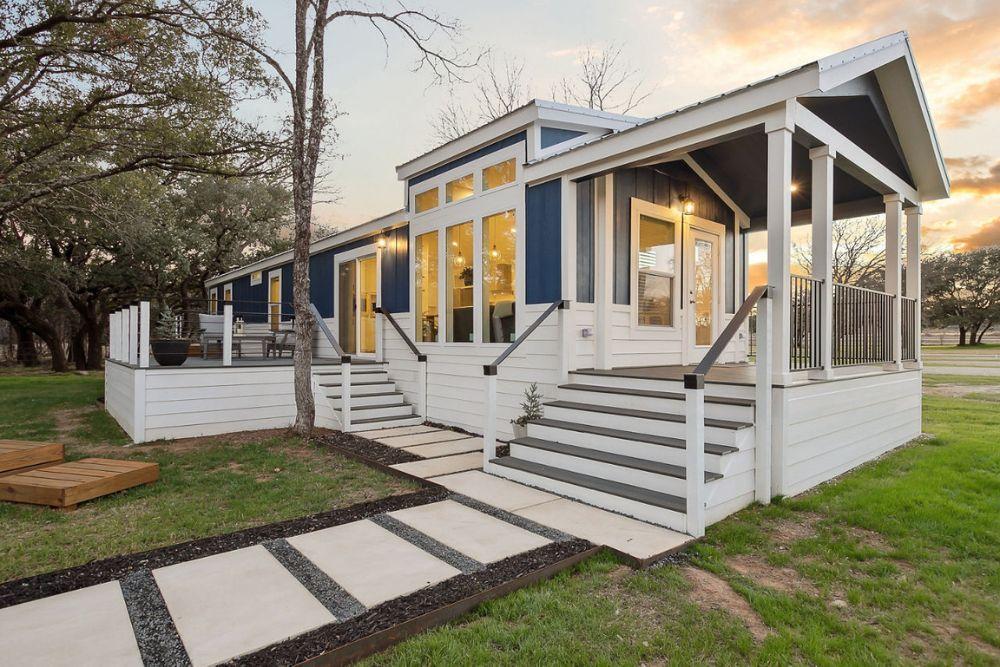
A truly monumental shift has occurred in the American real estate landscape, and it represents a massive win for prospective home buyers. After years of anticipation, advocacy, and rigorous debate, the federal 21st Century ROAD to Housing Act has officially become law.
The path this landmark legislation took to enactment was unique. The comprehensive package passed with overwhelming, veto-proof margins in both the U.S. House of Representatives and the U.S. Senate before being formally presented to the White House. While President Trump chose neither to sign nor to veto the bill—utilizing the moment to protest unrelated legislative stalling in the Senate—the U.S. Constitution dictates that a bill automatically becomes law if it is not vetoed within ten days (excluding Sundays) while Congress remains in session.
That critical ten-day window officially expired at midnight on Friday night/Saturday morning, officially making the 21st Century ROAD to Housing Act the law of the land.
This historic achievement represents one of the most comprehensive and significant bipartisan housing measures enacted by the federal government in decades. It arrives at a crucial moment when soaring property costs, inflation, and a severe shortage of residential inventory continue to challenge families and communities all across the country—and right here in Texas.
For the modern manufactured housing industry, Title III of the Act stands out as the most consequential and revolutionary section. By sweeping away decades of restrictive construction red tape, this new law paves the way for a brand-new era of design innovation, affordability, and streamlined financing.
The Big Three: What the New Law Changes for Manufactured Housing
The 21st Century ROAD to Housing Act introduces sweeping reforms aimed directly at modernizing the factory-built housing sector. For buyers, the most vital provisions contained within Title III include three massive structural and financial updates:
1. Elimination of the Permanent Steel Chassis Requirement
For half a century, federal regulations mandated that every single individual section of a HUD-code home be permanently built and transported on a heavy steel frame known as a manufactured home chassis. The new law officially eliminates this permanent chassis requirement for HUD-code manufactured homes.
Going forward, homes can be legally constructed either with or without a permanent chassis. Ground levels will still utilize frames for transport and structural stability, but upper levels can now be built without them, entirely transforming the architectural potential of factory-built homes.
2. Establishment of a State-Level Certification Process
To ensure smooth operations under these new building options, the Act establishes a rigorous state-level certification framework. This system governs the initial approval of chassis-free manufacturing designs and institutes a strict annual recertification process. This framework ensures that any factory utilizing the new design flexibility maintains the highest possible structural and safety standards.
3. Increased and Indexed FHA Loan Limits
On the financial front, the Act dramatically increases the statutory loan limits for both FHA Title I (property-only or home-only loans) and FHA Title II (traditional real property mortgages) financing. Even better, the law dictates that these loan limits will be automatically indexed for future inflation adjustments. This means your financing power will scale naturally alongside shifts in the economy, ensuring government-backed loans remain highly practical for buyers.
Why the Chassis Change Unlocks a New Era of Home Design
To truly appreciate why the elimination of the permanent steel chassis rule is being celebrated as a historic victory, it helps to look at the architectural limitations it previously forced upon builders.
Historically, requiring a massive, multi-thousand-pound structural steel frame underneath the second or third floor of a multi-story layout added an immense amount of dead weight. This requirement created extraordinary engineering challenges, made transportation via highway systems incredibly difficult, and drove up production costs to a point where multi-story manufactured homes were virtually nonexistent on the commercial market.
By allowing builders to construct upper floors without a permanent steel chassis, the 21st Century ROAD to Housing Act completely rewrites the design playbook. Manufacturers can now potentially engineer multi-story homes that look, feel, and function exactly like traditional site-built or modular houses.
This flexibility opens the floodgates to new aesthetic possibilities, such as:
- Beautiful high-ceiling entryways and soaring vertical spaces.
- Highly optimized staircase placements that don’t eat into valuable ground-floor living square footage.
- Potential multi-story footprints that allow growing families to add extra bedrooms and designated living zones vertically, which is perfect for maximizing smaller or narrower land parcels.
Lighter manufacturing methods on upper levels translate directly into significant savings on raw materials and shipping logistics. The ability to design and construct HUD-code homes with or without a chassis allows the industry to break into urban and suburban infill markets that were previously closed off due to space constraints, delivering highly attainable, beautiful housing solutions to families who want to live where they serve or right-size their lifestyle.
The Next Step: HUD’s Rule-making Process
While the federal law is officially enacted, changes will not appear on manufacturing lines overnight. Our attention now shifts directly to the U.S. Department of Housing and Urban Development (HUD).
As the primary regulatory body governing factory-built housing, HUD is tasked with developing and adopting the precise technical regulations, official revisions to the overarching HUD Code, and model building guidance required to safely implement these statutory changes.
HUD’s rulemaking process will involve deep collaboration with structural engineers, safety experts, and industry leaders to outline exactly how chassis-free upper stories must be designed, joined, and inspected. Because this formal administrative process takes time, homes actively rolling off factory lines today are still constructed under the existing, time-tested HUD Code.
This transitional phase is a benefit for active buyers: current inventory represents a proven, fully compliant, and highly stable investment that is ready for immediate delivery. As HUD finalizes its updated guidelines over the coming months, manufacturers will potentially roll out innovative multi-story designs, and our team will be ready to bring those advanced models straight to the Texas public.
The Texas Advantage: Proactive and Ready to Roll
Navigating massive national policy overhauls can occasionally create compliance bottlenecks at the state level, but the Lone Star State is exceptionally well positioned for this historic transition.
During the 2025 Texas Legislative Session, leaders at the Texas Manufactured Housing Association (TMHA) wisely anticipated that a major federal definition update was on the horizon. Moving proactively, TMHA successfully championed the passage of Senate Bill 1341 (S.B. 1341). This forward-thinking bill formally revised Texas statutes to explicitly reference the federal definition of a manufactured home, rather than tying state law to a rigid, chassis-dependent description.
Because of this quick legislative action, Texas law is already perfectly aligned with the newly enacted federal framework. Local buyers and retailers will not face months of state-level bureaucratic delays; Texas is fully prepared to move forward the exact moment HUD completes its internal implementation rules.
Looking to the future, TMHA has already announced plans to pursue several targeted legislative clean-up measures during the upcoming 2027 Texas Legislative Session. These refinements will further clarify localized property titling, zoning hooks, and installation rules to ensure the new federal provisions integrate flawlessly with Texas real estate practices.
A Shared Industry Victory for Attainable Housing
This monumental structural reform did not happen by accident. This achievement would have been entirely impossible without the relentless leadership, strategic vision, and sheer persistence of the Manufactured Housing Institute (MHI).
Working hand-in-hand with state organizations like TMHA, MHI spent decades educating lawmakers in Washington about how outdated regulations artificially suppressed the potential of factory-built real estate. Their tireless efforts helped build the massive, veto-proof bipartisan coalition necessary to carry these long-sought reforms across the finish line.
Ultimately, these regulatory updates represent a major victory for consumer choice. By blending the inherent cost efficiencies of controlled factory construction with the design freedom of traditional architecture, the manufactured housing industry is uniquely equipped to combat the housing supply shortages gripping both Texas and the United States.
How Braustin Homes Navigates Market Evolution
As federal codes and manufacturing capabilities evolve, having a trustworthy, knowledgeable guide in your corner is essential. At Braustin Homes, we pride ourselves on operating at the absolute leading edge of the industry. When/if new multi-story layouts, updated financing limits, and innovative construction methods become available, our customers will find them first.
Our family-focused team is here to provide honest guidance, zero sales pressure, and absolute transparency through every phase of your home-buying journey. No matter how national guidelines change, our landmark commitment to Always Upfront Pricing remains completely set in stone. The price you see listed on our website or showroom floor is the exact price you pay—free from hidden surcharges, surprise setup costs, or unexpected fees.
Whether you want to explore the reliable, energy-efficient models available for immediate setup today, or want to consult with a professional about how the new FHA loan limits can expand your buying power, we are ready to help. Visit our physical showrooms in South San Antonio or Odessa to talk face-to-face, or visit our contact page to get straight answers to your housing questions today.
Conclusion
The official enactment of the 21st Century ROAD to Housing Act marks the dawn of a highly sophisticated chapter for manufactured housing. The removal of the permanent steel chassis rule signals to the entire country that factory-built structures are a premier, permanent solution to modern housing challenges. With enhanced design flexibility, potential multi-story options, and stronger government-backed financing on the horizon, the dream of affordable homeownership has never been closer to reality.
You do not have to sit on the sidelines waiting for HUD to finalize its future paperwork to secure your family’s future. Beautiful, durable, and highly cost-effective homes are ready for delivery right now. We invite you to browse our extensive online model inventory or schedule a friendly, no-obligation consultation with a Braustin Housing Consultant today to discover just how simple buying a home can be.
About the Author
