


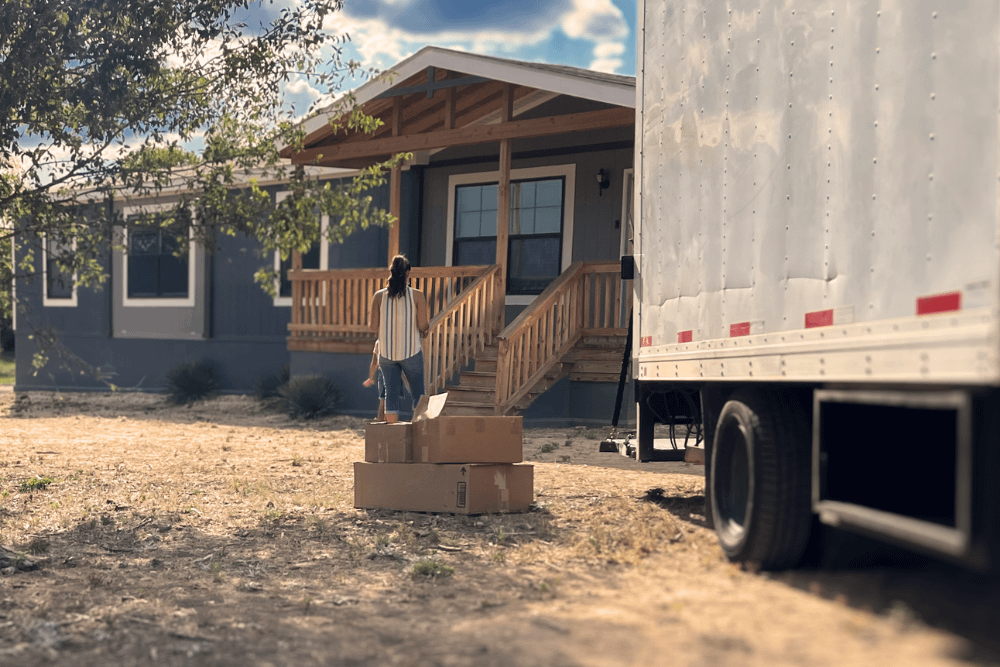
Most people searching this question want a single number. The honest answer is that the timeline isn’t one event — it’s a sequence of overlapping phases, and the one that stalls most buyers isn’t the factory build or even the delivery. It’s permits. Understanding exactly what happens when, and in what order, is the difference between a smooth move-in and a frustrating, expensive delay.
Whether you’re buying an in-stock home ready for immediate delivery or ordering a custom build from the factory floor up, here’s the full manufactured home delivery timeline — with specific numbers, not vague generalities.
The Short Answer: A Complete Timeline at a Glance
Buying an in-stock home: The home is already built. From the day you close, your total timeline to move-in is typically 4 to 8 weeks, driven almost entirely by permit processing and site preparation.
Ordering a custom build: Add 2 to 12 weeks for the factory to build your home (depending on the manufacturer and customization level), then add the same 4 to 8 weeks for site and installation work. Total end-to-end time can range from 6 weeks to several months.
The single most important thing to know: delivery day is not move-in day. More on that below.
Phase 1: Permits — Start Here First (2–4 Weeks)
Permits are the hidden bottleneck in almost every manufactured home project, and they’re the phase most buyers underestimate. Building, electrical, plumbing, and potentially septic permits typically take 2 to 4 weeks to obtain — and the clock doesn’t start until you submit a complete application.
In Texas, installers must also be licensed by the Texas Department of Housing and Community Affairs (TDHCA), adding another coordination layer before work can legally begin. In areas like Odessa, permit fees typically run $200 to $800, depending on the scope of work.
What slows this down:
- Incomplete applications or missing documentation
- Backlogged county offices (common in fast-growing rural areas)
- Additional requirements for flood plain properties, which require an elevation certificate from a licensed surveyor ($400–$1,000) before permits can be issued
- HOA or deed restrictions that must be resolved before a permit is even submitted
The most critical rule in this entire process: Verify that your land is zoned for manufactured home use before signing anything. We’ve seen buyers take delivery of a home only to discover after the fact that manufactured homes were prohibited on their property. That mistake costs thousands of dollars and significant stress for the families involved. A single phone call to your local county or city development office is all it takes to confirm zoning.
Phase 2: Site Preparation and Foundation (1–2 Weeks)
Site prep and permits often run in parallel, which is one of the smartest ways to compress your overall timeline. While permits are processing, your site crew clears vegetation, grades the land, addresses drainage, and begins foundation work.
Most manufactured homes in Texas use one of two foundation types:
- Pier-and-beam: The most common option, using concrete piers and steel I-beams. It’s adaptable to soil conditions and generally faster to install.
- Slab: A poured concrete pad, typically 4–6 inches thick with reinforcement and a vapor barrier. More stable and preferable for financing, but costs more — typically $6,000 to $12,000 depending on size and soil conditions.
In West Texas, clay soil is a known challenge. It shifts seasonally and may require soil testing and a specific foundation design before any work begins. Budget $3,000 to $8,000 for foundation work in most scenarios, and factor in $1,500 to $4,000 for site preparation itself.
One frequently overlooked requirement: your site must have clear road access for the transport vehicle. If it doesn’t, a new driveway or access road may be needed before delivery day.
Phase 3: Factory Build (In-Stock = 0 Weeks; Custom = 2–12 Weeks)
If you choose an in-stock home, this phase doesn’t apply to you — the home is already built and waiting.
For a custom-ordered home, the factory build begins after you finalize your spec sheet, which functions as the recipe the factory follows precisely. Once the order is handed off, there’s a concept in the industry called an “offline date” — the scheduled date your home enters the production line. Right now, factory offline dates across the industry can run 2 to 3 months out due to demand.
Every manufactured home built today must comply with the HUD Code (24 CFR Part 3280), the federal construction and safety standard that has governed factory-built housing since 1976. This means every component — from the steel I-beam chassis to the roof assembly — meets a defined safety threshold regardless of price point.
The factory build sequence typically runs:
- Steel chassis and sub-floor (2–4 days)
- HVAC ductwork, electrical rough-in, and plumbing installed before walls go up
- Exterior and interior wall panels assembled in separate stations and craned into place
- Roof assembly and moisture barriers
- Windows, doors, appliances, and finishes
- In-factory inspection — for double-wides, both halves are joined, water is tested, and electricity is tested before the home ever leaves the plant
Phase 4: Delivery and Physical Setup (1–3 Days)
On delivery day, a professional crew uses heavy equipment to place your home on the prepared foundation. For a single-wide, this is a one-step placement. For a double-wide, both sections arrive separately and must be positioned and aligned.
What happens after placement:
- The home is set on cinderblocks and leveled precisely
- Tires and transport axles are removed
- Steps are installed
- Sections are anchored to the foundation
Critical reminder: delivery date ≠ move-in date. It’s typically 24 to 72 hours from delivery before the home even begins the formal “set-up” process. The physical delivery itself takes 1 to 3 days, not hours.
Phase 5: Double-Wide Trim-Out (3–7+ Days)
If you purchased a double-wide home, there’s an additional step that single-wide buyers don’t face: trim-out. This is the process of seaming the two halves together — installing ridge trim, interior finish work, paint touch-ups, and any ceiling or flooring that crosses the marriage line.
Trim-out typically takes about 3 days from setup completion, but weather delays or contractor scheduling can push this to a week or more. This is one of the most weather-sensitive steps in the entire process.
Phase 6: Utility Connections (2–4 Weeks, Overlaps with Setup)
Utility connections run roughly in parallel with setup and trim-out. Connecting electricity, water, sewer or septic, and gas typically takes 2 to 4 weeks after permits are approved — but the good news is you can begin hookups as soon as the home is physically set, even before trim-out is fully complete.
What drives the cost variance here: distance to the nearest utility lines. Connection costs range from $2,000 to $10,000+ depending on how far your site sits from existing infrastructure. Rural properties requiring a private well and septic system face the highest costs and longest timelines.
In Texas, electricity coordination involves providers like Oncor or AEP Texas; natural gas typically runs through companies like Atmos Energy. Neither will schedule meter installation without a finalized permit.
Phase 7: Final Inspections and Move-In Clearance (1–2 Weeks)
After setup, licensed inspectors review electrical, plumbing, and structural integrity. In Texas, this process is overseen by the TDHCA and local county offices. Inspections typically wrap within 1 to 2 weeks.
Failing an inspection doesn’t mean your project is derailed — it means specific items require correction before clearance. Working with licensed, experienced contractors familiar with local code is the most effective way to pass on the first attempt and avoid re-inspection delays.
Full Timeline Summary Table
|
Phase |
Typical Duration |
|
Permits |
2–4 weeks |
|
Site Preparation & Foundation |
1–2 weeks |
|
Factory Build (custom only) |
2–12 weeks |
|
Delivery & Physical Setup |
1–3 days |
|
Double-Wide Trim-Out |
3–7+ days |
|
Utility Connections |
2–4 weeks (overlaps) |
|
Final Inspections |
1–2 weeks |
|
Total (in-stock home) |
4–8 weeks from permit application |
|
Total (custom build) |
6 weeks to several months |
The Most Common Causes of Delays
Understanding what causes delays is just as important as understanding the timeline itself. In our experience, the most frequent culprits are:
- Zoning not verified before purchase — properties that can’t legally accept a manufactured home
- Permits submitted late — waiting until after closing instead of starting the permit process in parallel
- Factory offline dates — especially during high-demand periods when lead times extend significantly
- Site access problems — delivery trucks unable to reach the property
- Weather during trim-out — the most weather-vulnerable phase of the entire install
- Inspection failures — typically tied to unlicensed or unfamiliar contractors
At Braustin Homes, we guide buyers through every one of these potential sticking points from contract to keys. We can calibrate the pace of the process to your specific needs, and we’ve pre-ordered factory build slots specifically to reduce wait times for our customers.
What to Do Before You Even Select a Home
The buyers who move in fastest are the ones who start site-related tasks early — often before they’ve even finalized their home selection:
- Verify zoning with your county or city development office
- Check for deed restrictions or HOA rules that may prohibit manufactured housing
- Run a flood plain check at fema.gov — if the land is in a flood zone, budget for an elevation certificate and adjusted foundation height
- Identify utility access — know whether you’ll tie into municipal systems or need a well and septic
- Start the permit application process as early as possible
If you need land and a home together, Braustin can help with that too — and the earlier we can assess site conditions, the faster everything moves.
Putting It All Together
The total time from contract to move-in ranges from as few as 4 weeks for a buyer with permitted, prepared land purchasing an in-stock home, to 6 months or more for a custom build on raw land requiring a well, septic, and new utility runs. The variable that most buyers overlook — and that creates the most frustration — is permits. Start that process immediately after closing, run site preparation in parallel, and the timeline compresses significantly.
Manufactured homes are built under controlled factory conditions to federal HUD standards, which actually makes the construction phase more predictable than site-built housing. What introduces variability is everything that happens on your specific piece of land. Know your land, know your permits, and know who you’re working with.
Frequently Asked Questions
Q. How long does it take to set up a manufactured home after delivery?
A. Physical delivery and setup takes 1 to 3 days for placement, leveling, and anchoring. However, this is not when you can move in. After delivery, you still need utility connections, trim-out (for double-wides), and final inspections — adding another 1 to 3 weeks in most cases.
Q. What is the fastest possible timeline to move into a manufactured home?
A. If you purchase an in-stock home and your land is already permitted, cleared, and utility-ready, you can potentially move in within 4 to 6 weeks of closing. This scenario requires that permits are processed quickly and contractors are available. Most buyers should plan for 6 to 8 weeks under realistic conditions.
Q. What is the difference between delivery day and move-in day?
A. Delivery day is when the home is physically placed on your foundation. Move-in day comes later — typically 24 to 72 hours after delivery before setup even formally begins, followed by trim-out, utility connections, and inspections. Treating delivery day as move-in day is one of the most common and costly planning mistakes first-time buyers make.
Q. How long do permits take for a manufactured home in Texas?
A. In Texas, building, electrical, plumbing, and septic permits typically take 2 to 4 weeks to process. Permit fees generally range from $200 to $800 depending on the county and scope of work. Texas also requires that all installers be licensed by the Texas Department of Housing and Community Affairs (TDHCA). Starting your permit application immediately after closing is the single most effective way to shorten your overall timeline.
Q. Does a double-wide take longer to set up than a single-wide?
A. Yes. In addition to the standard setup steps, double-wide homes require a trim-out phase where the two sections are seamed together with interior trim, paint, and finishing work. This typically adds 3 to 7+ days to the timeline, with weather conditions being the biggest variable.
Q. What is a “factory offline date” and why does it matter?
A. An offline date is the date your custom-ordered home enters the factory production line. Due to demand fluctuations, offline dates can run 2 to 3 months out from when you place your order. Braustin Homes pre-orders factory build slots to reduce wait times for our buyers — one of the practical reasons to work with an experienced dealer rather than going directly to a factory.
Q. Can I save time by starting site prep before my home is built?
A. Absolutely — and you should. Site preparation, permit applications, and foundation work can all begin before your home reaches its offline date. Running these phases in parallel instead of sequentially is the most effective way to compress your total timeline and avoid sitting on a completed home waiting for land that isn’t ready.
Q. How much does manufactured home setup cost in Texas, separate from the home price?
A. Setup costs in Texas typically break down as follows:
- Land Preparation: $2,000–$5,000
- Foundation: $3,000–$8,000 (pier-and-beam); $6,000–$12,000 (slab)
- Permits: $200–$800
- Utility Connections: $2,000–$10,000+
- Installation Labor: $3,000–$7,000
- Total Estimated Setup Costs: $10,000–$30,000+
Costs vary significantly based on land condition, distance to utilities, and soil type. Always get site-specific quotes before finalizing your budget.
Ready to start planning your move? Browse our available homes or contact the Braustin Homes team to walk through your specific land situation, timeline, and financing options. We’ll be with you from contract to keys.
About the Author
